Andreessen Horowitz announced a $1.1 billion fund on Friday August 28, 2026 called the Machine Age Fund, and its target is deliberately unglamorous. Not models, not applications, but the physical layer: chips, memory and networking gear for data centres, plus edge AI hardware, smart home appliances and robots. The people running it come from infrastructure rather than consumer software, with Martin Casado and Raghu Raghuram as general partners and former Intel data centre chief technology officer Guido Appenzeller as a partner. The thesis is a supply problem. Hardware supply chains are built to grow twenty or thirty percent a year, and current demand asks for far more.
The short answer
Andreessen Horowitz announced the Machine Age Fund on Friday August 28, 2026, raising $1.1 billion for the physical layer of AI: data centre chips, memory and networking gear, plus edge hardware and robotics. General partners Martin Casado and Raghu Raghuram, both formerly senior at VMware, run it with partner Guido Appenzeller, previously chief technology officer of Intel's data centre group. Named holdings include solid state transformer maker Heron Power, data centre builder Volta Infra and chipmaker Unconventional. The fund extends work that has already backed more than six infrastructure startups over two years.
The funding announcements that matter to people who run infrastructure are rarely the ones about models. This one is about transformers, memory and switch silicon, which is to say about the things that have actually been stopping projects this year.
What the fund is buying
Andreessen Horowitz put $1.1 billion behind a straightforward proposition: the interesting scarcity in AI has moved from software to metal.
The mandate covers data centre equipment, and the firm is specific about which parts. Chips, memory, networking gear. It then extends past the rack to edge AI hardware, including smart home appliances and robotics, which is the segment where inference eventually stops being someone else's problem and starts being a device on a shelf.
Three holdings are named. Heron Power makes solid state transformers for data centres, which is a power delivery play rather than a compute one. Volta Infra builds data centres, and readers here will recognise it from the $10 billion, six year commitment Anthropic made for 133 MW of hydro powered Norwegian capacity. Unconventional is a chipmaker. Several robotics startups are in the portfolio without being listed.
The thesis, stated plainly
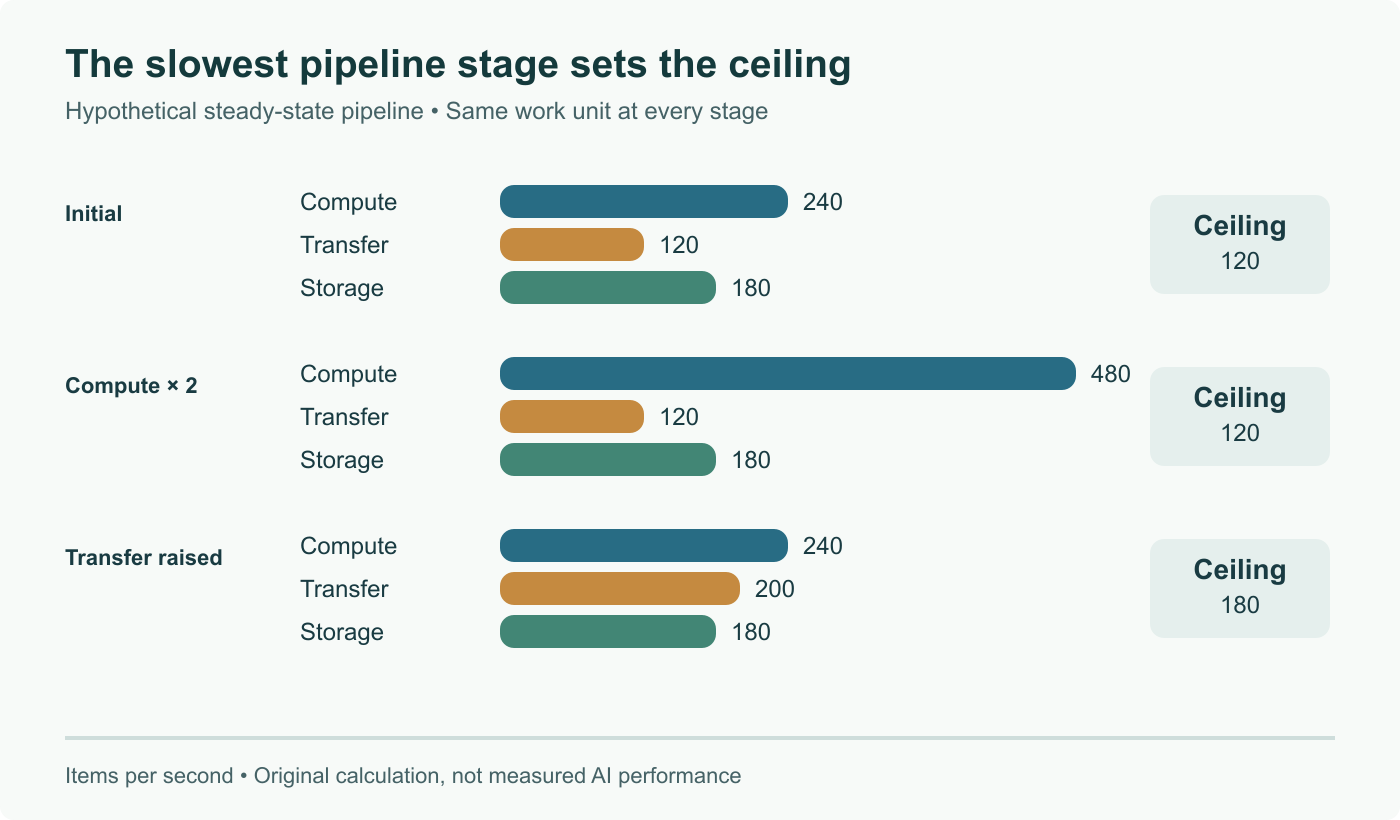
The argument the firm makes is about supply elasticity, not demand. Hardware supply chains are structured around twenty to thirty percent annual growth. Demand is currently asking for something closer to triple digits. The firm's position is that this gap does not persist, and that the adjustment is where the returns are.
You do not have to take a venture firm's word for the diagnosis, because the symptoms are visible without it. Nvidia has told server builders to expect AI system prices to rise more than fifteen percent in early 2027, driven by DRAM and HBM costs. Power availability, not silicon availability, is what sets data centre schedules now, which is why a startup selling flexible power draw raised $150 million at a billion dollar valuation this week. The constraint has moved down the stack, and capital is following it.
The bench tells you more than the number
Venture funds are easy to read once you look at who is running them, and this one is legible.
Martin Casado and Raghu Raghuram are the general partners, both from senior roles at VMware. Guido Appenzeller joins as a partner after serving as chief technology officer of Intel's data centre group. That is a networking and virtualisation bench, not a consumer software one, and it matches a portfolio built around power delivery, silicon and physical build out.
It also explains the size. At $1.1 billion the fund is smaller than Kleiner Perkins at $3.5 billion in March 2026 and much smaller than Thrive Capital at $10 billion, both of which aim largely at model and application companies. Hardware positions absorb capital differently: money goes into fabrication runs, tooling and physical validation on timelines that do not compress, so a fund of this size buys a meaningful book in this segment rather than a token one.
What it means downstream
For anyone specifying or operating infrastructure, the relevant question is not whether a16z makes money. It is whether the bet is aimed at the right bottleneck.
On the evidence it broadly is. Rack level power delivery, memory supply and interconnect are where the pain currently sits, and all three are segments where incumbents have had a comfortable decade. More venture funded competition there is good news on a multi year delay, in the same way that funded robotics startups such as the ones arriving with hundreds of millions and a working line at Toyota eventually change what hardware you can buy.
The caveat is the one attached to every infrastructure thesis. If the supply gap closes through ordinary capacity expansion rather than through new entrants, the money mostly funds a crowded field. Announced funds are not deployed funds, and the Machine Age Fund has three named positions and a plan.
Sources and further reading
- Andreessen Horowitz raises $1.1B AI infrastructure fund for chips, robots and more, SiliconANGLE, August 28, 2026
- AI Infrastructure Fund Secures $1.1 Billion From Andreessen Horowitz, Bloomberg, August 28, 2026
- The week's biggest funding rounds, Crunchbase News
Frequently asked questions
What does the Machine Age Fund actually invest in?
The physical layer of AI rather than the software on top. That means data centre equipment, specifically chips, memory and networking gear, and it extends outward to edge AI hardware including smart home appliances and robotics. The named holdings show the range: Heron Power builds solid state transformers for data centres, Volta Infra builds the data centres themselves, and Unconventional is a chipmaker. Several robotics startups are in the portfolio without being named. Read the mandate as everything between the electricity supply and the accelerator, plus the devices that end up running inference outside a rack.
Why raise a dedicated hardware fund now?
Because the constraint moved. For several years the scarce input in AI was model capability, then it was accelerators, and now it is increasingly power delivery, memory supply and the physical build. The fund's stated thesis is that hardware supply chains are structured to grow at twenty to thirty percent a year while demand is asking for triple digit growth, and that the gap forces change. Whether or not you accept the framing, the observable market agrees: memory prices are pushing server costs up, and power availability now gates data centre schedules more often than silicon availability does.
Who is running the fund?
General partners Martin Casado and Raghu Raghuram, both of whom held senior roles at VMware, alongside partner Guido Appenzeller, formerly chief technology officer of Intel's data centre group. That is an unusually infrastructure heavy bench for a venture fund, and it is the most informative signal about what the fund expects to do. These are people who have shipped networking and virtualisation products at scale rather than consumer platforms, and the portfolio so far reflects that background.
How big is $1.1 billion compared with other AI funds?
Modest, and that is the point. Kleiner Perkins raised $3.5 billion in March 2026 and Thrive Capital raised $10 billion, both aimed largely at model and application companies. Hardware rounds tend to be smaller and slower than software rounds because the capital goes into fabrication, tooling and physical testing rather than headcount, so a $1.1 billion fund buys a meaningful number of positions in this segment. Comparing the headline numbers across categories tells you more about what each category costs than about conviction.
Does this change anything for engineers rather than investors?
Indirectly, and on a delay. Venture money flowing into transformers, memory and networking silicon is a bet that the bottleneck sits in power delivery and interconnect, which is exactly where anyone running or specifying infrastructure has been feeling it. If the thesis plays out, the practical consequences over the next few years are more competition in rack level power components and more startup silicon in networking, in a segment that has been comfortable for incumbents. If it does not, the constraint stays where it is and prices stay where they are.