
AMDGPU: understanding HDMI Passive VRR
AMD proposes keeping compatible HDMI displays in VRR signalling mode on the desktop. What the patches change, and why Linux 7.4 is not a delivery promise.
PeopleAreGeek / Publications
News, analysis and practical guides on development, networks and systems. The latest publications first.
AMD proposes keeping compatible HDMI displays in VRR signalling mode on the desktop. What the patches change, and why Linux 7.4 is not a delivery promise.

Cache reads fall to $0.25 per million tokens. A worked cost example explains why that does not cut an entire Claude API bill by 75%.

A reported Anthropic-Lambda agreement points to Beacon Point. Distinguishing the reported tenant chain, contracted IT power and future delivery.

Empirik announces funding and an agent that maps the impact of infrastructure changes. A practical way to test the claims before granting write access.

The AMD ATL change avoids unnecessary module loading on Zen systems without enabled DRAM ECC. What this means for logs and memory-error monitoring.

Linux is 3.90% in Valve’s August survey. Recalculating the monthly change and CachyOS share without confusing percentage points with user counts.

Tripo announces 3 billion yuan in funding and previews P2.0 quad output. What topology changes, and what still needs testing in a production asset.

WinBtrfs 1.10 fixes snapshot writes and several Windows crashes. How to approach the update and why a Btrfs scrub is not a complete filesystem check.

AMD’s CPPC proposal uses three fallback frequency values for selected Zen 6 clients. Their ratios explain scheduler preparation, not retail CPU performance.

Firefox 155 adds connection racing and QUIC v2 negotiation. What Mozilla confirms, what the IETF draft describes and what an endpoint operator can check.

KDE Linux adds automatic home snapshots and access through Dolphin. How Btrfs, Snapper and KIO Snapshot fit together, and what they cannot protect.

The B650-based PB65MX3 adds NVMe, SATA and USB through PCIe 4.0 x4. Its slot allocation and shared bandwidth are the limits to check before buying.

The Olympus SMT proposal prefers PE0 to avoid alternating active siblings. Both PEs have equal steady-state capacity; the reported gain is workload-specific.

Servo 0.5 reports faster canvas and text rendering. Why the headline gains are workload-specific, and how to evaluate an embedded application.

LUOSession connects services to kernel live-update sessions. It does not transparently preserve every process, descriptor or device across a kernel replacement.

Auke Kok describes a Rust distribution-building stack. Recipes, repositories and provenance have distinct roles; public readiness remains a separate milestone.

Incus copies container storage before stopping it for a final sync. How to plan the restart, estimate interruption and check ZFS or Btrfs prerequisites.

AMD DCN6 headers explain much of Linux 7.3-rc1’s size. What the release message establishes and how to compare a test kernel with a known-good build.

The v7.0-mk2 tree partitions hardware between Linux kernels. Read its x86 support, vendor measurements and practical limits before comparing it with KVM.

OpenAI proposes November 12 for ending its Cursor model-supply contract. Map affected workflows and test an alternative without assuming all access ends.

Reports of Mac purchases for computer-use training do not reveal where models execute. Separate desktop environments, inference and learning before sizing.

OpenShot 4.0 adds capture and grading workflows. Understand microphone versus screen audio, the macOS limitation and a short export check before a long take.

Pangolin adds an AI Gateway and expands Community access features. Understand virtual keys, estimated budgets, unpriced models and transcript retention.

Alibaba announced its Brazil region on August 27. Two data centres do not automatically give an application zone-failure tolerance or every AI service.

The reported 50 billion yuan raise and 500 billion valuation are different quantities. Calculate the implied post-money value without claiming a closed deal.

The NVIDIA optical-flow filter creates intermediate frames. Check extension support, filter availability and the quality versus speed effects of perf and grid.

The port is approaching a basic compute milestone. Understand compiler, runtime, driver and memory responsibilities without mistaking progress for support.

The administrator estimates about 2% legitimate requests. Challenge completion is not proof of humanity, and request share is different from CPU cost.

KVM separates page-table format, guest walking and table building. Understand the cleanup, nested translation and the specific Xen timing fix.

Reported data-centre robot trials raise an operational question: how do you establish the correct target and verify recovery after a physical intervention?

Ludloff’s message documents cache-operation prefixes for an unnamed implementation. Read existing WBNOINVD behaviour, fallback and the limits of attribution.

The Machine Age Fund targets AI hardware. What the announcement establishes, and why more compute does not automatically remove a system bottleneck.

MHS is a research preview for programmable instruments. QuEra’s example separates AI-assisted controller development from deterministic execution.

Chris Mason’s Btrfs entry changes from maintainer to reviewer. The patch updates contacts and records a handover he says happened years earlier.

Debian selected Responsible Use of Generative AI. Disclosure is encouraged, while review, licensing and responsibility remain part of contributing.
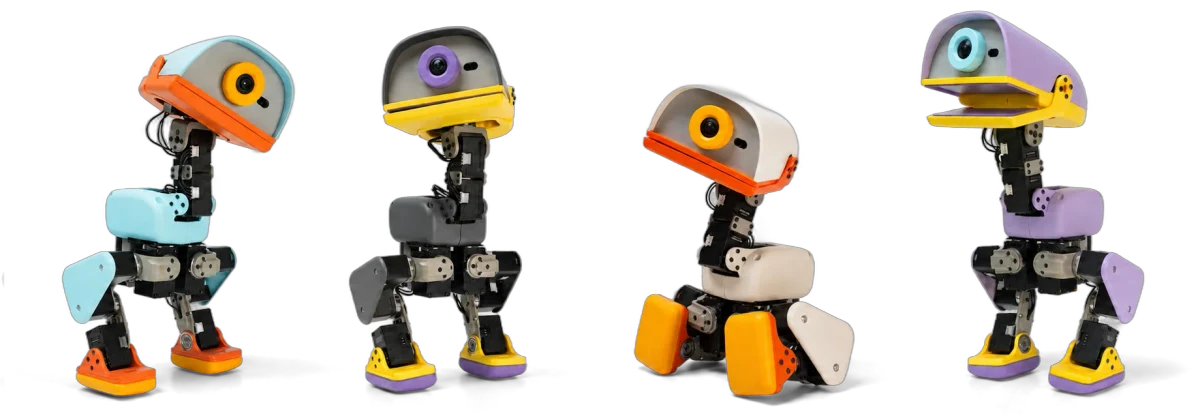
Microduck opens pre-orders at $399. Its press kit distinguishes open software from hardware and lists the specifications that remain provisional.

The new USB-C helper distinguishes supported, unsupported and unknown cables. Missing identity data does not automatically mean the cable is rejected.

ReactOS combines its live and installation image. Wine 10 synchronization is still underway, and Server Core keeps the Win32 subsystem.

The funded Flatpak work targets finer permissions and portal maintenance. Planned features should not be confused with protections already installed.

ROCm 10 adds ROCm.AI, including preview tools and Hyperloom. Evaluate optimization with correctness checks and end-to-end timing, not kernel speed alone.

M3 support reached Asahi’s installer on September 6 in Expert mode. GPU acceleration, sleep, MacBook HDMI and the M3 Ultra still need careful distinction.

The companies announced a global patent cross-license. The public statement does not establish the performance or Wi-Fi certification of any product.

MGLRU promotes mapped executable folios after first use. The reported 15% reduction concerns system CPU time in a constrained build, not total elapsed time.

Block-device I/O gains dropbehind support. It still uses the page cache, and pruning is conditional rather than an immediate guarantee after every call.

Register an article-outline tool with WebMCP, understand ChatGPT’s supported subset, and keep annotations separate from actual permissions.

Ubuntu 26.04.1 media are available, but normal upgrades from 24.04 were deliberately delayed. A point release does not restart the support clock.

The reported Anthropic contract concerns future capacity. Separate the tenant allocation, the Monarch campus plan and the power needed to operate it.

DuckLabs says its AWS transaction concluded on August 31. DuckDB keeps its MIT license and Foundation stewardship; deployment choices remain separate.

AWS and Nvidia plan additional GPUs across several generations. The announcement is a capacity roadmap, not an instance availability or performance result.

The kernel SMB server gains Apple interoperability. A visible share is only the start: verify backup, recovery and reconnect behavior on the intended setup.

CB_NOTIFY lets cooperating NFS clients receive directory changes. The benefit depends on delegation and notification support, not just a server upgrade.

The revised Zstd proposal uses kernel CPU feature dispatch. Its large decompression gain comes from a specific 4 KiB KVM benchmark, not all workloads.

Nvidia confirmed a $12.93bn agreement on September 3. Its platform commitments should be distinguished from each model’s license and actual deployment needs.

wmbench separates uncapped rendering from fixed workloads. Backend, window geometry, missing protocols and sensor coverage determine what a comparison means.

MTurk’s official closure FAQ separates task submission, approvals, bonuses and transaction history. Map each workflow to the relevant deadline.

Cisco adds Supermicro systems to its AI portfolio with orders planned for October. Front-end and back-end networks retain different traffic roles.

Emerald AI funds power-flexible data centers. Reducing a grid peak and reducing total energy are separate outcomes that need different measurements.

IBM’s 3B, 8B and 30B models share thinking controls, but not every training stage. Model weights and usable context require separate memory budgets.

MetaRoCE moves recovery and path control to endpoints. Its August description reports tests and schedules public specification and tooling for October.

Nvidia says Groq 3 LPX is in full production. Its reported Gemma 4 result concerns token generation; tool waits and prompt processing remain separate.

OpenAI’s Jalapeño results normalize throughput by rated accelerator power. That is different from measuring complete-system energy for a matched workload.
![Original matrix-vector example: stored rows [1, 2] and [3, 4] multiplied by input [5, 6] give 17 and 39. Bringing input to arithmetic near stored rows can reduce weight movement. Not Samsung’s exact layout or instruction sequence.](/media/samsung-lpddr5x-pim-hot-chips-2026-explained-en.webp)
Samsung’s PIM design computes beside DRAM banks. Its internal bandwidth and demonstrated token rate measure different parts of the inference system.
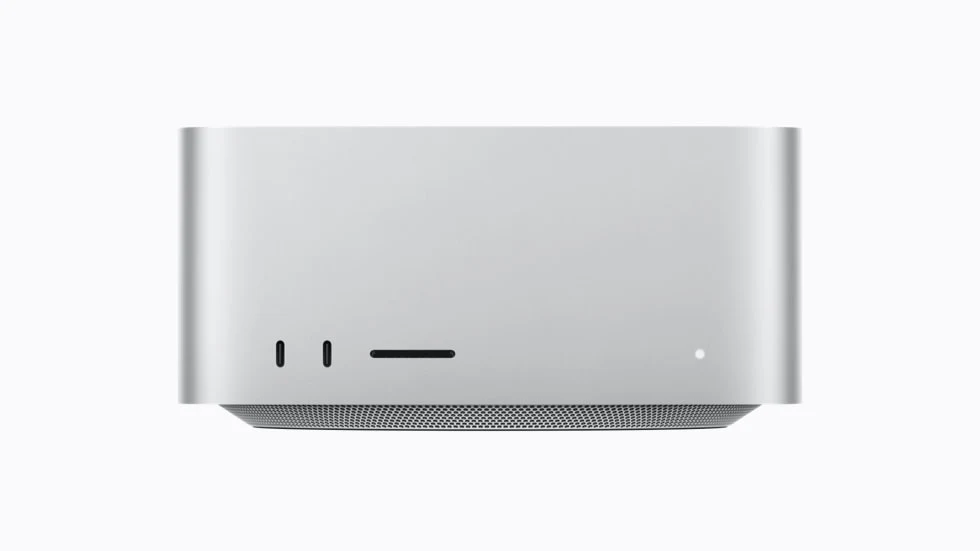
Apple announces a Mac Studio with up to 512GB of memory. A sizing calculation explains what capacity tells you, and what still needs a benchmark.

The ath11k v3 proposal enables airtime queue control. Its 22 ms result uses tighter settings and lower throughput; defaults do not deliver that gain.

Infineon’s planned C2i acquisition concerns digital power control and future packaging. A simple current calculation explains the distribution problem.

The Xe fix protects compression metadata by rounding usable VRAM down to 4 KiB. Its changed assertion matters too; this was more than a word swap.

Wan3.0 supports up to 30-second video and multimodal references. Check input combinations, region and model weights separately from Alibaba’s financing.

The sale report now has an official follow-up. Use pinned revisions, complete artifacts and an offline startup rehearsal to assess dependence on the Hub.
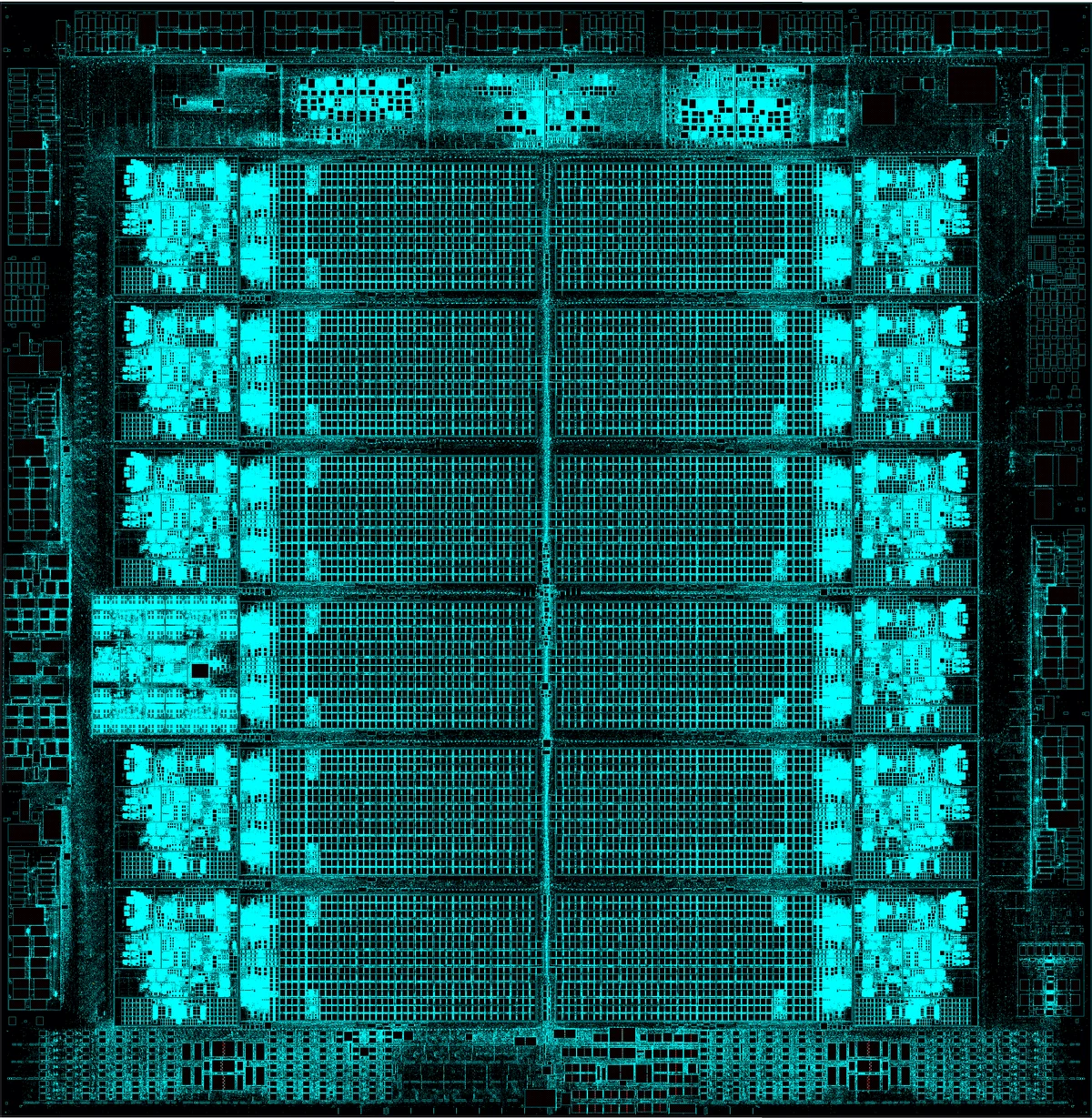
IBM presents a future dual-architecture processor. Native instruction support is significant, but it does not settle application or operating-system support.

A 120-second EFI completion timeout contains a firmware hang. It disables runtime services rather than repairing firmware or making later EFI writes work.

Merged DAX fixes prepare for FAMFS. Its separate proposal maps shared memory as files, without making all CXL memory persistent or automatically coordinated.

Omacom’s updated total includes token credits and multiyear commitments. Its Hyprland sponsorship starts October 10; the initial $8m headline is outdated.

PR 7500 adds basic pre-Windows-8 job support. Closing any handle does not automatically kill every process, and the merge does not prove browser isolation.

The August 21 firmware merge adds GC 11.7 files and associated display and security firmware. It does not certify a complete Linux graphics experience.

Anthropic confirmed the hire of former Google TPU leader Amir Salek. Its co-design effort is real, but the report supplies no finished accelerator or ship date.

KDE reduces a panel visibility timer from 500 to 50 ms. The change concerns waiting after pointer movement, not a tenfold speedup of the desktop.

Reported increases above 15% concern selected AI server configurations shipping in early 2027. A weighted-cost example explains why memory content matters.

Sol standard API pricing is $4 input and $20 output per million tokens. Calculate a mixed workload and account for long-context and promotional conditions.

The August 31 revision clarifies AMD’s UALoE proposal: exported memory is pinned and remote access uses authorized handles. Upstream delivery remains separate.

Apprise 1.13.1 followed the planned final 1.x release with attachment fixes. Bound the major version, lock tested dependencies and validate real delivery.

GitHub’s incident report links sidecar saturation to cascading authentication failures. A retry calculation explains why restoring capacity was not enough.

Google reports a billion Gemma downloads and over 100,000 variants. Download events, unique devices and successful deployments are different quantities.

The SAE auto-connect fix concerns wpa-psk profiles. Separate that path from routing and DNS failures, and account for stricter private 802.1X profiles.

The reported $6 billion license and $1 billion investment are different transactions. Poolside’s technical writing explains the training system behind the story.

The new recovery command addresses unreachable mirror legs still expected by the pool. It preserves activity checks and requires a fenced failed peer.

The VA-API backend adds a Direct3D video decode path for H.264. Application use, host driver support and the Wine build all matter; gains require measurement.

PayGo and reserved license-included AVS capacity have different deadlines. Check reservation expiry, portable VCF registration and the actual BYOL core count.

Check the editor, sign-in route and enterprise preview status separately. Google’s official settings demo shows where administration controls are configured.

Jakub Kicinski describes growing review pressure in the Linux 7.3 pull request. His AI estimates and future automation plans need to retain their qualifiers.

Algebraic methods permit regrouping without promising a universal speedup. A binary64 example shows the numeric effect; Rust 1.98.1 also fixes a separate bug.

Direct I/O, metadata tracking and fsync improve in specific cases. Read each measurement separately and check the changed cache and recovery mount behavior.

European advertising has expanded, with Ads Manager self-service announced August 31. Personalization controls and the limited Free Ads-Free option differ.

The old JSON import uses a new engine while preserving semantics. Explicit v2 has stricter defaults; a migration matrix and Go 1.27.1 clarify the next step.

The EEVDF task choice is flattened within each CPU’s fair runqueue. Cgroup accounting remains hierarchical, and a September correction fixes throttling.

KSM’s 705-to-1.67 ms result is a specific lock-hold benchmark. zsmalloc improves another path, with architecture and configuration limits on lock removal.

The filing describes conditional share rights, not a $12.2bn cash gift. Vesting, chip purchases and cash or cashless exercise are separate steps.

Veeda’s funding supports learned simulation for physical AI. A branched-action example explains why realistic video alone cannot validate a robot trainer.

Three WSE-3T wafers provide the advertised 750 sparse-FP16 PFLOPS. Memory bandwidth, external I/O and measured token speed describe different things.

Origin can host code or mirror GitHub, but mirroring keeps GitHub authoritative. Check pull requests, CI, permissions and sync before treating it as failover.

Etched raised $700 million at a $21 billion valuation and shipped a first customer rack. Delivery, customer contracts and independent benchmarks are distinct.

JLL compares planned hyperscale sites with an earlier delivered cohort. Distance affects network design, but the average is neither a relocation nor an RTT test.

Nvidia’s quarterly filing confirms limited H200 shipments. Reported ByteDance and Tencent quantities remain separate from company-confirmed deployment data.

Reported wafer-price increases vary by node and customer market. Good-die yield, packaging and contract scope determine the cost of a finished chip.

Warp’s cloud-agent platform now includes Factory Benchmarks. Compare configurations on fixed tasks, count retries and keep correctness checks independent.

Future contracts, cash capex and working capacity are different measures. Alphabet’s filing shows how to read obligations without turning dollars into GPUs.

FESCo rejected additional v3 packages for Fedora 45 on August 17. Resubmission needs performance and image-planning evidence; Fedora 46 is not guaranteed.

Understand chunks versus windows, one-based CSS sibling indexes and local WebSocket permissions. Firefox 155.0.1 now fixes subsequent sidebar and CSS issues.

Groq targets more than 200 MW in 2027 and plans Nvidia LPX deployments. Financing conditions, installed power and useful inference throughput remain distinct.

FailFS removes ambient path access, but retained directory descriptors still matter. Check entry conditions and distinguish retired SGI EFS from Amazon EFS.

Wispr announced a Canto preview alongside its $280 million round. Its accuracy claims need context, and zero-edit rate cannot be inferred from average word errors.

Higgsfield announces a $5.4B valuation and $700M annualized revenue. What those figures measure, and how to evaluate the video platform beyond generation counts.

Google lists August 17 for Imagen 4 retirement. Migrate model selection, requests and image parsing; Firebase and the direct Gemini API use different examples.

Linux 7.2 adds cache-aware scheduling and USB4STREAM. Understand the transfer path, configuration requirements and late DRM scheduling reverts.

A disputed chip estimate raises a useful question: what does installed AI capacity measure? Read Microsoft’s capex figures and power boundaries correctly.

PORTS-Pike combines an OpenAI lease, SB Energy construction and NVIDIA credit support. The guarantee ceiling is neither immediate spending nor completed capacity.

Stripe confirmed an acquisition agreement on August 19. OpenRouter says integrations stay unchanged; understand what routing and billing each control.

Preliminary revenue reporting needs careful arithmetic. Separate quarterly sales, annualized pace and adjusted operating income before drawing conclusions.

The August vote is complete. Understand the default option, majority thresholds and why the Social Contract ban did not fail solely because of a 3:1 rule.

The June 30 filing shows large Intel and SpaceX positions. Compare share counts, reported value and purchase cost without treating the table as a trade history.

The August 14 close is confirmed in a filing. The later OpenAI supply notice matters more to users than unverified forecasts about branding or default models.

Apple proposed US link-out commissions in court. A worked example separates the requested rate, processing costs and checkout conversion.

The visible watermark toggle does not remove SynthID. Understand the separate roles of on-screen branding, embedded signals and Content Credentials.

Intel’s scheduler corrections address load stranded across equal-capacity clusters. See the mechanism, current source and limits of performance claims.

Copilot’s update treats ordinary chats, group chats and saved research differently. Check the migration path before assuming every feature carries over.

Qwen3.8-27B offers downloadable weights, but precision, context and serving overhead determine whether a configuration actually fits your hardware.

RustDesk’s Wayland preview uses a privileged DRM capture path. Understand the service boundary and what to verify before relying on remote access.

Faster runners help only part of a CI pipeline. A worked example separates queueing, execution and fixed steps when assessing Blacksmith’s funding story.

Databricks links its funding to agent infrastructure. Separate valuation from revenue, and database state from proof that an external action completed.

DeepSeek’s current peak schedule applies on weekdays. A token-mix calculation shows why the cache-price headline is not the increase in every bill.

The 3.7 Flash launch remains historical news, while 3.8 is now available. Calculate current and scheduled token charges without hiding thinking costs.

The ninth-generation NAND announcement combines CBA and six planes. Decode its bit units before confusing chip density with usable drive capacity.

Ultrafast previews faster GPT-5.6 Sol inference on Cerebras. A latency breakdown explains why token throughput and completed-task time differ.

Stopping a container is not enough to rename its volume. Podman 6.1 also clarifies image-declared storage through Quadlet’s ImageVolume setting.

The August Sysinternals update included RDCMan 3.20; the current release is 3.21. Shared RDG files need both format and credential compatibility checks.

Claude’s detector is in private preview. Understand supported models, weak signals after proofreading, and why a watermark does not establish authorship.

CodeRabbit expands into change triage and security. A worked example shows why review volume and alert count cannot establish defect-detection quality.

Chestnut costs $249 as a dock; the complete kit now lists at $899. Separate USB4 docking from custom USB3 compute and check the TinyGPU requirements.

Google reports one billion monthly Gemini users. Voice users, Live interactions and image output measure different things; a simple example explains why.

The multi-year agreement targets NVIDIA infrastructure on IBM Cloud, expected in early 2027. It does not establish an equity investment or a GPU unit price.

Lovable raised at a $13.3B valuation. Its new drafts isolate frontend exploration, but currently use the published app’s database: understand that boundary.

Bian-May now has 26.1.1 images. Understand desktop and kernel variants, rolling updates, and why an installed kernel is not necessarily the running one.

The Apple GMUX patches target a specific Intel MacBook Pro. Understand the GPU power cycle, audio dependencies and the limits of the reported idle saving.

LACT adds NVIDIA controls and fixes Blackwell hotspot readings. Separate telemetry from tuning, and hook configuration authorization from hook execution.

The fair-policy default was reverted before Linux 7.2 shipped. Check the final source, and separate GPU scheduling from dependency waits and CPU scheduling.

The RFC reports a large gain for 64 kB mTHP, while 2 MB THP barely changes. Read the shared baseline and distinguish page lookup from application speed.

SFrame v3, Android relocation packing and ICF fixes change more than link time. A small address example shows why surviving code still needs valid metadata.

The announced platforms aim to mobilize third-party capital under final agreements. Separate that target from funded projects and the value of collateral.

Choose the right Linux package and architecture, understand XWayland defaults, and separate local project access from running an AI model offline.

UFS emulation and big-endian RISC-V improve functional tests. Understand the byte-order example and the host requirements behind nested HVF virtualization.

Macquarie and GIC plan infrastructure leased to Anthropic. A financing example explains why majority equity does not mean most of a project’s total cost.

FastFlowLM joins ROCm and adds SmolVLA. On Linux, understand the separate kernel, XRT and model requirements before interpreting a successful validation.

One Framework laptop improved with power-profiles-daemon. Understand why identical profile names can hide different settings and how to compare fairly.

The Fedora 45 CoreOS plan combines compressed swap and oomd. Kubernetes startup, Pod swap policy and pressure-based termination still need separate checks.

Nova’s firmware format carries tagged metadata. Understand its alignment and validation rules, and why GSP boot is only one part of virtual GPU support.

Bloomberg reports a $7 billion employee share repurchase at an $852 billion valuation. Why a buyback differs from fundraising and does not prove retirement.

Proposed perf support covers Raspberry Pi interconnect monitors, including Pi 5. Understand what shared counters reveal and what they cannot attribute.

YouTube’s February 2027 changes distinguish new entry from continued Shorts earnings. Check the January terms deadline and understand rolling view totals.

CachyOS adds experimental server installation profiles and rewrites tools. Understand what changes for existing installations and what server readiness needs.

Intel priced a $20 billion offering at $95, then underwriters exercised the extra option. Follow the share counts, gross proceeds and dilution arithmetic.

Torvalds linked rc7’s size to AI-assisted review. What the announcement says, what commit totals cannot prove, and how to make a useful regression comparison.

Mint’s planned kernel manager distinguishes tracked, custom and protected kernels. Understand the cleanup policy and why environment changes need new sessions.

The August Mesa patch enables 256-register tests in Intel executor and adjusts validation. It does not itself establish a new automatic policy for all games.

Meta’s local agent model has separate text, vision and draft files. Check runtime support, context allocation and total memory before choosing a GGUF build.

A common manifest can move skills and MCP configuration between clients. Transport support and execution permissions still need separate verification.

Cloudflare reports a non-human majority on its own network. Understand the measurement boundary and why more edge requests need not mean more origin work.

DeepMind opens cyclone forecasting code and weights. Training cutoffs, Mini resolution and ensemble interpretation determine what a reproduction can show.

Linux patches investigate the 7320 Detachable camera. Sensor identity, reset wiring and RGB-IR pixels explain why capturing a frame is only one milestone.

DOE’s GS1 initiative solicits scientific contributions. The official portal separates application from data delivery; a model release needs its own evidence.

Scheduler changes distinguish movement between equal-capacity clusters from moving a task to a stronger CPU. The distinction does not promise a universal speedup.

NextSlide confirms its team joined OpenAI to work on ChatGPT. Distinguish the acquisition statement from product promises and genuinely editable slide content.

AMD plans to acquire Taalas. Its specialized HC1 silicon demonstrates fast Llama generation, but model quality and end-to-end response time still matter.

Linux 7.3 gains initial M3 Pro, Max and Ultra device descriptions. Check Asahi’s per-device matrix before confusing a boot framebuffer with desktop readiness.

The reported ByteDance training target is not a released specification. A parameter count can support a storage calculation, but cannot rank model quality.

Lumilens reports over $900 million raised and a first scale-out product shipping. Its broader NPO/CPO roadmap needs separate deployment evidence.

NOOA puts agent state, methods and prompts in Python classes. Typed results help integration, but business rules and execution isolation remain separate.

Triton connects Windows graphics to Neptune and host renderers. UTM 5.0.5 beta supplies an experimental path, with guest tools and backend limits to check.

TTM tries eviction before fallback for protected allocations. Understand min versus low, cgroup hierarchy and why protection is not unlimited physical capacity.

Wine 11.15 lists an MSXML3 IStream fix and double-sRGB correction. An original calculation explains the color error without pretending to be a game screenshot.

Spur combines Rust, GPU placement and Slurm-style commands. Evaluate job semantics, accounting and controller failure before treating it as a replacement.

Linux restored Btrfs COW fixup before 7.2 final. The merged code explains the missing reservation path and why a clean scrub cannot prove every write arrived.

GCC 16.2 fixes more than 102 bugs. Compare it with 16.1 using the same language mode, flags and dependencies before removing any workaround.

Bloomberg describes a screenless OpenAI device. Its reported shape and price do not answer what it records, sends to the cloud or retains.

The Linux RFC targets memory by node, zone, order and migration type. A simple page diagram explains why free capacity and contiguous capacity differ.

PoCL 7.2 is now final. Khronos lists specific Star64 and Milk-V CPU configurations; that does not certify the board GPU or predict application speed.

Nikkei reports limited CXMT adoption by HP, Asus and Acer. Firmware inventory can help trace a machine, but it does not certify its DRAM dies or reliability.

Jeff Dean and colleagues founded Discovery Loop to automate research. Its ambition makes experiment selection and independent evaluation central questions.

NVK gained mesh shaders in Mesa 26.2. Query the actual GPU features and enable them; the Mesa version alone does not establish what an application can use.

Meta’s terminal agent supports persistent work. Check workflow availability, shared services and the chosen data tier before evaluating its output.

The Synx RFC proposes cross-processor synchronization. Later review challenges its dma-fence interoperability because completion must respect memory-management rules.

Version 0.10 passed 645 of 690 listed GNU tests. The newer 0.11 uses a different tally, while rm --one-file-system was still unimplemented in 0.10.

Linux 7.3-rc2 contains busy polling in stream reads and writes. It changes poll behavior and can consume CPU while waiting; it is not a universal latency switch.

AMD proposes a Linux eSPI bus framework. Its first RFC implements link configuration and reset, while channel operations and interrupt handling remain deferred.

Apple’s motion concerns alleged confidential information and evidence. OpenAI disputes it and links its September opposition; neither filing is a judgment.

C-Kermit 11 changes collision and transfer-mode defaults. A concrete migration matrix checks the destination, payload and failure handling; 11.0.509 is available.

Cloudflare OS separates collaborative gadgets from reusable blueprints. Its early-access architecture needs permission and sharing tests before company deployment.

FEX 2608 changes Wine thread-suspension waits, not every x86 spinloop. Version 2609 adds an optional JIT disk cache with growth and invalidation caveats.

An intel_pstate change clears HWP’s desired-performance field when DEC is enabled. It keeps the other controls and is present in the Linux 7.3-rc2 history.

The new Tokenomics Foundation plans common AI cost methods. A worked example explains why cheaper requests can produce more expensive usable outcomes.

Li Chen’s RFC creates a taskless pidfd before launching. Its implementation still uses vfork-style machinery; a new interface is not yet pristine process creation.

The reported Anthropic compute deal sits above a separate Bitdeer lease. Power boundaries and contract scope matter more than a single headline megawatt figure.

FFmpeg 9 adds animated WebP input. Its libwebp_anim encoder and WebP muxer also exist; a useful conversion must preserve timing, loop policy and transparency.

The GNOME Boxes rewrite bundles its virtualisation stack. Here is a concrete evaluation plan that keeps beta testing separate from existing virtual machines.

Greg Kroah-Hartman’s August 3 policy concerns drivers/staging. Its security-fix exception requires actual hardware tests and a defensible report, not just a build.

NVIDIA’s LVFS sponsorship accompanies DGX Spark firmware rollout. A sponsor name does not establish update availability for every device carrying the brand.

Qwen3.8’s released 2.4T weights are text-only and require thinking. The 27B model supports vision; licensing and memory needs differ from the hosted Max service.

Wild adds --gdb-index and changes output handling on Btrfs/vfat. An index moves work to link time; debugger reuse and cache state determine the useful tradeoff.

Versioned repositories let moss cross on-disk format changes. The August ISO incorporates that transition; reflinks and network naming need separate attention.

Mutter 51 beta adds Wayland background blur; the release candidate adds policy. A requested region still needs client support and a readable fallback.

The macOS-to-Linux ARM64 layer now documents git and clang, but its maintainer has stepped away. Compatibility, host access and support remain separate questions.

RTL8261C/D support is present in Linux 7.3-rc2. The PHY driver, firmware, MAC and board integration all matter before a port can deliver useful 10GbE throughput.

August reporting described constrained MacBook Air supply. Server-memory forecasts provide context, but cannot establish today’s delivery date for your configuration.

Microsoft’s July quality update targets memory efficiency on PCs with 8GB and above. The useful test is responsiveness under the same workload, not an idle screenshot.

DynaCache reuses translated code, with a default disk limit and a DIRTY-mode exclusion. The configurator helps inspect profiles; faster starts still need measurement.

The transparency rules apply from August 2, with a limited marking transition in Commission guidance. Identify the actor, output and exception before adding a label.

A draft RFC framework would preserve project decisions. Extension guidance already asks authors to understand and maintain code, including its cleanup lifecycle.

The Go1.28 collection umbrella remains a proposal. Go 1.27 supplies Hasher; matching the hash to the equality relation is the essential design constraint.

Linux recognizes Starfire’s memory-controller ID. Intel’s newer brochure lists up to 80 total TOPS, while radiation characterization remains explicitly in progress.

The correction assigns Family 1Ah models D0-D7 to Zen 5. Family/model classification is distinct from marketing names, shipping products and measured performance.

NetBSD 11 adds stable RISC-V support and a lean x86 MICROVM kernel. The project’s boot figure excludes the separate question of when your application is ready.

The MSI PRO B850-P WIFI release supports Phoenix, not every AM5 processor. Power restoration and update limitations need a more precise reading.

The July 31 ruling concerns six musical works and reproducible outputs. Its reasoning does not turn every AI model into a proven copy of every training work.

Google withdrew its Earth image-generation feature after launch. Generated scenes were not public map replacements, but screenshots could lose their context.

The fast path depends on direct scanout to a display attached to the rendering eGPU. A KWin change alone does not make every application or driver eligible.

Linux disables link power management for specific Western Digital model strings. A targeted quirk is different from disabling it for every SATA device.

Servo 0.5 follows July’s 0.4 report with broader platform binaries and more fixes. A page that looks correct still needs input and state checks.
The European Commission opened its AI Gigafactories call on July 30, 2026: up to seven sites, 75,000 to 100,000 chips each, bids close November 12.
Google DeepMind shipped Gemini Robotics 2 on July 30, 2026: a whole body action model, an ER 2 reasoning model in preview, and an on-device variant.
A Nouveau patch queued for Linux 7.3 lets userspace allocate NVDEC channels through ABI16, which is what Mesa's NVK driver needs to advertise H.264 decode.
Nscale agreed on July 30, 2026 to acquire Anyscale, adding an orchestration layer above its GPU fleet. Ray itself stays governed by the PyTorch Foundation.
OpenAI cut GPT-5.6 Luna API prices by 80% and Terra by 20% on July 30, 2026, three weeks after the family reached general availability. Sol is unchanged.
The Linux Foundation's Open Programmable Infrastructure project published OPI Abstraction v0.1.0, a vendor neutral API layer across 26 repositories.
Amazon asked the FCC to authorise up to 5,105 satellites for direct to device service on Globalstar L-band and S-band spectrum, with deployment starting in 2028.
AMD posted kernel patches on July 29, 2026 extending the amd_hsmp driver to Zen 6 client chips, using the Ryzen Master SMC message set instead of the EPYC one.
ChipAgents announced $60 million on July 29, 2026, led by B Capital, taking its Series A to $131 million across three tranches, with agents aimed at verification.
The CMA opened an investigation on July 29, 2026 into whether Microsoft gave 365 Personal and Family subscribers clear information about the Copilot price rise.
A $300 million CHIPS award funds GlobalFoundries work on co-packaged optics, targeting 400Gb/s and a 5x energy efficiency gain, with Washington taking 1% equity.
Azure crossed $100 billion in annual revenue and grew 43% last quarter, yet Microsoft's CFO says cloud demand still exceeds the capacity available to serve it.
Xen 4.22 shipped on July 30, 2026 with per domain Xenstore quotas, AMD Zen 5 Bus Lock Threshold support on x86, PSCI suspend to RAM on Arm and FF-A 1.2.
YSERVER 1.4.0 gives Chrome and Steam real GPU acceleration on a from scratch Rust X11 server, written largely with Claude Code and passing 672 XTS5 tests.
AMD signed fifteen year leases with Core Scientific for about 530 MW of US capacity, worth over $14 billion, plus a reservation right on nearly 2 GW more.
A Meta kernel engineer proposes per core EPP boosting for amd_pstate. On a Steam Deck it lifts 1% low frame rates by 31.8% in Civilization VI.
ARCTIC launched a ten channel PWM fan controller whose hwmon driver was upstreamed months before the product. It lands in Linux 7.2 and works with lm-sensors.
A voice model trained on one gaming GPU became Fish Speech, then $21M of ARR across 8 million users. Three of the five models stay open, one does not.
The GCC Steering Committee adopted a policy declining legally significant contributions derived from LLM output. Test cases are carved out, and it is provisional.
Meta and BlackRock will develop a $14B, 1 gigawatt campus in El Paso. BlackRock funds own 80%, a $12.5B debt package carries it, Meta leases the whole thing.
One developer, six months, 335,000 lines. Starling ships a Wayland compositor, an X11 server and a Swift shell, and runs Chrome and Slack unmodified.
Collabora has RADV, Mesa's open source Vulkan driver for AMD GPUs, running Counter-Strike 2 on Windows. Valve funds it, and the kernel interface is the blocker.
The Q2 2026 status report runs to 41 entries. The headline is a clean room NTSYNC driver matching the Linux 7.0 interface, with an AMD ROCm port in progress.
The 2026-07-28 revision of the Model Context Protocol drops the initialize handshake and Mcp-Session-Id, so any request can land on any server instance.
Moonshot AI published the full weights of its 2.8 trillion parameter Kimi K3 on Hugging Face, along with the attention kernels and MoE communication library behind it.
NVIDIA takes a reported five billion dollar stake in Ilya Sutskever's lab and gives it Vera Rubin systems, moving SSI off Google TPUs and onto GPUs.
Build enters public alpha in New Zealand on July 28. A phone turns a prompt into a playable game, then faces the same discovery ranking as every other Roblox title.
Canonical will ship qemu-hwe, libvirt-hwe, edk2-hwe and seabios-hwe on a six month cadence, so an LTS host can track newer QEMU without leaving the LTS.
Binutils 2.47 is out with an ld -O 0 level that skips mergeable section merging, --start-lib for loose object files, and a batch of new RISC-V extensions.
Foxconn replaced VMware and SAN storage across factories in China, Taiwan, Vietnam and North America with hyperconverged software from Arcfra, a company founded in 2024.
Paolo Bonzini merged the kvm-chainsaw branch, breaking struct kvm_mmu into three. No new feature, but a large piece of nested virtualization confusion goes away.
Linux 7.2-rc5 landed on July 26 with over 35% of its changes in networking drivers. Torvalds calls it too big but not scary. Stable targets August 16.
NVIDIA is reportedly in talks to guarantee $250 billion so OpenAI can lease SoftBank's 10 GW Piketon campus. The structure matters more than the number.
Shopify's next storefront theme drops JSON heavy configuration for HTML and Liquid, cutting code by 93 percent. The reason given is that AI agents read HTML better.
Anthropic shipped Claude Opus 5 on July 24 at five dollars per million input tokens, half what Fable 5 costs, and it wins several published benchmarks.
A transmission fault in Ashburn sent about 3 GW of data centers to backup power in seconds. Nobody lost power, and that is exactly what worries grid operators.
Four competing proposals, from an outright ban to conditional acceptance, went into discussion on July 24. Whatever Debian picks, derivatives will copy it.
Released July 25, glibc 2.44 lets you set tunables in a config file instead of an environment variable, plus a THP switch and faster math.
NVIDIA, Microsoft, Meta and dozens more asked US policymakers not to restrict downloadable model weights. The signatory list doubled in a day and OpenAI joined.
A twenty year old Launchpad bug is finally getting closed. If your scripts read /etc/debian_version to detect the distribution, now is the time to fix them.
Apple announced MapKit for Automotive, an SDK that puts Apple Maps in the car as native navigation without CarPlay. Ford's 2027 EV platform is the first user.
Black Forest Labs launched FLUX 3, one set of weights that generates images, 20 second video with native audio, and robot actions. Open weights come later in 2026.
Intel posted $16.1B in Q2 2026 revenue, with data center and AI up 59% to $6.3B on Xeon 6. Demand now outpaces supply, which changes how you plan a refresh.
Greg Kroah-Hartman released seven stable Linux kernels on July 24, from 5.10.261 up to 7.1.5, one of them carrying over 2,000 patches. Here is how to stage it.
Qualcomm told customers on July 24 that chip prices rise by a double digit percentage for shipments after September 1, blaming supplier costs it can no longer absorb.
Stripe is reportedly in talks to acquire OpenRouter for close to $10 billion, roughly eight times the model routing startup's $1.3 billion valuation from May.
At Advancing AI 2026 on July 23, AMD launched its Instinct MI400 GPUs, EPYC Venice CPUs, and the Helios rack, with Anthropic committing to up to 2 gigawatts.
AMD and Cerebras will pair Helios racks with the Wafer-Scale Engine for disaggregated inference, claiming up to 5x tokens per watt, a modelled figure, in late 2026.
Anthropic updated Claude voice mode on July 23 so you can pick Opus, Sonnet, or Haiku, with voice actions in Gmail, Calendar, Slack, Canva, and Notion.
Etched raised $300 million at a $10.3 billion valuation to scale Sohu, its transformer-only inference chip, in a round led by Sequoia with a16z and SK hynix.
Anthropic shipped Record a Skill in Claude Cowork on July 21. Screen record a task once, narrate it, and Claude turns the demo into a reusable Skill.
Block released Buzz on July 21, a free Apache 2.0 open source workspace built on Nostr where humans and AI agents share channels, code, and portable identity.
NVIDIA launched Spectrum-6, a 102.4 Tbps Ethernet switch for the Vera Rubin platform that doubles capacity and holds 95 percent efficiency past 100,000 GPUs.
OpenAI launched Presence, a limited availability platform for deploying voice and chat AI agents with policies, guardrails, simulations, and Codex driven evaluation.
OpenAI unveiled Project Camellia, a 3.2 gigawatt data center in Effingham County, Georgia, on a 25 year Georgia Power deal with up to 1,000 MW of demand response.
General Compute secured up to $400M from Upper90 to build an inference neocloud on SambaNova SN40 and SN50 chips, using inference silicon as loan collateral.
Google released Gemini 3.6 Flash on July 21, a cheaper and more token efficient Flash model tuned for agentic coding, now rolling out in GitHub Copilot.
Kubernetes v1.37 hit code freeze on July 22, 2026. It requires containerd 2.0, makes cgroup v2 mandatory and ships DRA and etcd RangeStream changes.
On July 21, 2026, OpenAI launched a ChatGPT for small businesses program built on ChatGPT Work, an agent that acts across apps and files with partner skills.
Alibaba previewed Qwen3.8 Max, a 2.4 trillion parameter multimodal model it ranks second only to Fable 5, with open weights promised soon.
CXMT priced an 8.6 billion dollar Shanghai IPO, Asia's largest of 2026, as the world's fourth largest DRAM maker scales up server and AI memory production.
Hut 8 signed a second 15-year, 352 MW lease worth 9.8 billion dollars, fully commercializing its 1 gigawatt Beacon Point AI data center campus in Texas.
Microsoft will deploy AMD Helios rack-scale systems on Azure, pairing Instinct MI455X GPUs, EPYC Venice CPUs, and Pensando networking to serve frontier AI.
Z.AI has begun operating a 1 gigawatt data center running only Chinese-made chips, training its GLM models on Huawei Ascend hardware and the MindSpore stack.
Cloudflare's Wrangler CLI now manages Flagship feature flags from the terminal, so you can create flags, flip kill switches, and roll back from CI or a script.
The European Commission issued binding DMA measures on July 16, telling Google to open eleven Android features to rival AI assistants and share anonymized search data.
Google renamed NotebookLM to Gemini Notebook on July 16 and gave every notebook a secure cloud computer that writes and runs code against your own sources.
SAP has completed its acquisition of Prior Labs, the German lab behind TabPFN, backing a European frontier AI lab with more than one billion euros over four years.
Walden Robotics launched from stealth with 300 million dollars at a 1.1 billion valuation, and its general purpose robots are already working on a Toyota line.
For part of Friday July 17, 2026, Apple passed Nvidia as the world's most valuable company near 4.9 trillion dollars. What the crown swap means.
Equinix has topped out its MU4 expansion in Munich, adding room for thousands more cabinets at one of Germany's key interconnection metros.
Japan's FRONTia project puts 27,500 Nvidia Rubin GPUs in a 140 MW national AI factory to train robotics models. Inside the Noetra plan.
Spectro Cloud raised more than 100 million dollars in a Series D led by Goldman Sachs to help teams put AI on Kubernetes into production across clouds.
Anthropic is in early talks to lease as much as 10 billion dollars of compute from Meta over two years. What Meta Compute means for the cloud market.
Fireworks AI closed a 1.5 billion dollar Series D at a 17.5 billion valuation. Why specialized open model inference is the story developers should read.
Google has delayed Gemini 3.5 Pro after the model missed internal targets on coding and long horizon reasoning, pushing the flagship months past its June date.
Thinking Machines released Inkling, a 975 billion parameter open weight MoE with 41B active, a 1M token context, and weights on Hugging Face under an open license.
Moonshot AI shipped Kimi K3, a 2.8 trillion parameter open MoE model with a 1M token context and thinking mode, with open weights due July 27.
PostgreSQL 19 Beta 2 shipped on July 16, 2026, bringing the REPACK command, SQL/PGQ property graphs, JIT off by default and lz4 TOAST compression.
Bankers at Goldman Sachs, Morgan Stanley and JPMorgan are scheduling investor meetings for Anthropic, pointing to a listing as soon as October 2026.
China's Cyberspace Administration approved Apple Intelligence on July 15, 2026, on the back of a deal to run Alibaba's Qwen model inside iOS, iPadOS, macOS and visionOS.
Apple released the iOS 27 public beta on July 13, 2026, putting the redesigned AI Siri in front of everyone. For developers, App Intents is now the only way in.
Emergent, an Indian AI coding platform launched in June 2025, raised a 130 million dollar Series C at a 1.5 billion valuation with 120 million in run rate revenue.
etcd v3.7.0 shipped in early July 2026 with RangeStream, keys only queries and a lighter startup path, cutting etcd CPU use for Kubernetes clusters versus 3.6.
TYLsemi left stealth on July 14, 2026 with a 43 million dollar round and a full stack chiplet platform for custom AI silicon, with TSMC samples due in 2027.
ASML reported 9.3 billion euros of Q2 net sales and raised its 2026 outlook to 43 to 45 billion euros, as Intel became the first to ship logic made with High NA EUV.
Linux 7.2 reached rc3 on July 12, 2026, carrying cache aware scheduling, an Intel led feature that keeps tasks sharing data on the same last level cache.
Governor Hochul signed an executive order pausing state environmental permits for new data centers of 50 megawatts or more, for up to one year.
Rakuten Mobile has deployed 1Finity Open RAN radios across its nationwide 5G network in Japan, with a further 3,000 massive MIMO units planned at 3.7 GHz.
Reflection AI signed a compute deal worth over 1 billion dollars with Nebius, running through 2029 and giving it access to Nvidia GB300 chips to train open models.
Tower Semiconductor is investing about 3 billion dollars in Japan for 300mm silicon photonics and silicon germanium, backed by roughly 1 billion in grants.
Cloudflare's new Monetization Gateway uses the x402 protocol and HTTP 402 to let any site charge callers per request for pages, APIs, datasets and MCP tools.
Intel is investing 5 billion euros in its Leixlip campus in Ireland to scale Xeon 6 and next gen Xeon on the Intel 3 node, after buying back full control of Fab 34.
An internal memo says Meta will put its fourth generation MTIA chip, Iris, into production in September 2026 to double compute and lean less on Nvidia and AMD.
Mistral released Leanstral 1.5, an open weights Apache 2.0 model for Lean 4 that proves code correct and found 5 unknown bugs across 57 real repositories.
OpenAI released the GPT-5.6 family (Sol, Terra, Luna) plus ChatGPT Work, a desktop agent with Codex built in that turns a goal into finished docs, sheets, and code.
Meta will spend about 10 billion dollars on its first Canadian data center in Alberta, drawing near 1 gigawatt. Why power, not chips, now sets the pace.
SambaNova closed the first part of a 1 billion dollar Series F at an 11 billion valuation to scale on premises AI inference. Why the anti Nvidia bet grew.
SK Hynix raised 26.5 billion dollars on Nasdaq, the biggest foreign US IPO ever, to fund HBM and fab expansion. What it means for AI memory supply.
How to run Qwen locally in 2026: Qwen 3.7 open weights are not out yet, so we set up the newest open Qwen with Ollama, by size, with a one-tag swap for 3.7.
A practical awk cheatsheet: print columns with $1 and $NF, set field separators with -F, filter rows by pattern, sum a column, and use BEGIN and END blocks.
A practical dig and nslookup cheatsheet: look up A, AAAA, MX, TXT, NS and CNAME records, trim noise with +short, trace from the root with +trace, and query @8.8.8.8.
A practical Docker cheatsheet: run a container with docker run, list with ps, follow logs, exec into a shell, bring a stack up with compose, and prune disk.
A practical git cheatsheet: check status, stage and commit, switch branches, and get out of trouble with reset, restore, revert, stash and reflog.
A practical sed cheatsheet: substitute with s/old/new/g, edit files in place with -i and a backup, delete lines, and print specific lines with -n p.
AI in cybersecurity in 2026: what it really does for defenders (triage, summarization, code review), what attackers do with it, and the dual-use problem.
Anthropic disabled Claude Fable 5 and Mythos 5 worldwide after a US government order. The timeline, the trigger, and how to fall back to Opus 4.8 fast.
A bug bounty starter guide for sysadmins: how your DNS, HTTP and Linux skills transfer, the five free tools I open, and the report shape that gets paid.
How I run a local AI agent with Ollama and Qwen 2.5 in 2026: install on Windows, Linux or macOS, pick the model your VRAM fits, call it from Python and LangChain.
CentOS to Rocky Linux 9 migration, end to end: the in-place ELevate route, the fresh-install route, the pre-flight inventory, and the breaks that fail silently.
A hands-on ChatGPT vs Claude vs Gemini comparison for 2026, ten real jobs tested through the APIs: code, research, writing, data, vision, cost and latency.
A practical Linux chmod and chown cheatsheet: the Permission denied fix with chmod +x, why 755 and 644 keep showing up, chown for ownership, and recursing safely.
Choosing a Linux distribution in 2026 without the tribal noise: four inputs that decide (team skills, compliance, app stack, support) plus honest distro profiles.

Compare Fable 5.1 and Opus 5 using current API prices, a reproducible cost example and a migration checklist. Updated September 8, 2026.
Master Core Web Vitals in 2026: what LCP, INP and CLS really measure, lab vs field data, the fixes that still hold up, plus budgets and a weekly workflow.
Build a CTF lab on Hyper-V: three trust-segmented virtual switches, a Kali attacker, Metasploitable3 and a broken Windows 10, with pfSense in the middle for routing.
A practical curl cheatsheet: download and keep the remote name with curl -O, follow redirects with -L, fetch headers only with -I, and POST JSON with -d.
DNS over HTTPS the way I roll it out: what DoH buys you (and what it does not), flipping it on for Windows, Linux and macOS, plus self-hosting and edge enforcement.
ESXi host Not Responding in vCenter is almost always a dead management link, not a dead host. Restart hostd then vpxa, clear the log partition, check ports 902/443.
A practical Linux find cheatsheet: find by -name, big files with -size +100M, recent ones with -mtime, delete with -delete, and run -exec on each hit.
Git rebase vs merge, decided in one mental model and five real situations: branch diagrams before and after, the exact commands, and the rule I never break.
A practical Linux grep cheatsheet: search one file with grep pattern file, search a whole tree with grep -rn, ignore case with -i, invert with -v, and pick -E or -F.
Fix Hyper-V 'the hypervisor is not running' by working the five gates in order: BIOS virtualization, the feature, hypervisorlaunchtype, conflicts, services.
Image optimization techniques for 2026: why AVIF goes first with WebP and JPEG behind it, responsive srcset, the lazy-load plus LCP trap, compression, and CDN automation.
A hands-on INP optimization guide for 2026: the twelve Interaction to Next Paint killers I keep finding in audits, how to profile them, and a real 480ms to 120ms fix.
iptables vs nftables, side by side: list rules, allow SSH on dport 22, default drop policy, persist to rules.v4 or nftables.conf, convert with iptables-translate.
Linux firewall comparison for 2026: iptables, nftables, firewalld and ufw all poke one kernel. Per-distro defaults, the same rule four ways, plus my honest pick.
Linux kernel hardening with sysctl: the 32 toggles I actually ship, grouped by subsystem and sorted by how much each one matters, plus a drift check.
ifconfig and netstat are gone on most modern Linux installs. The iproute2 replacements you need: ip a, ss -tulpn, ip route, ip neigh, and a clean old-to-new map.
MikroTik vs Ubiquiti for a prosumer home network: matched stacks under 400 EUR, CLI vs UI, real routing protocols, Wi-Fi roaming, VPN, a 3-year cost breakdown.
Mobile optimization in 2026: the Core Web Vitals targets for mobile (LCP under 2.5s, INP under 200ms, CLS under 0.1), what slows a phone, and how to test like one.
Network config across Linux distros in 2026: netplan, ifupdown, NetworkManager, systemd-networkd and wicked compared, with the static IP recipe for each.
A practical nmcli cheatsheet for NetworkManager: scan and connect to Wi-Fi, list saved connections, bring them up and down, check device status, and set a static IP.
pfSense vs OPNsense for home networks, run side by side on one N100 mini-PC for years: UI, update cadence, plugins, real benchmarks, appliances, and which I pick.
A PowerShell networking cheatsheet: test a port with Test-NetConnection, read your IP and DNS with Get-NetIPConfiguration, find listening ports, resolve names.
Proxmox vs ESXi vs Hyper-V in 2026: honest cost, licensing, clustering, backup and containers after the Broadcom shakeup, plus which fits homelab or enterprise.
A Python regex cheatsheet of 20 tested re patterns: email, IPv4 and IPv6, URL, phone, ISO 8601, UUID, CSV split, log lines, slugs, with the edge case for each.
A practical Linux rsync cheatsheet: mirror with rsync -av, copy over ssh with -avz, mirror exactly with --delete, dry-run, resume, and the trailing slash gotcha.
Ubuntu 24.04 server hardening, the way I run it on every VPS: keys-only SSH on a quiet port, UFW, fail2ban, unattended updates, AppArmor enforcing, auditd.
Self-hosted WireGuard VPN on a 5 EUR VPS: pick split vs full tunnel, generate Curve25519 keys, write the server and client configs, and get NAT and DNS right.
Server monitoring with Nagios on a Hyper-V Ubuntu 24.04 VM: build Nagios 4.5 from source, aim HTTP, SSH, MySQL and disk probes, then wire mail and Telegram alerts.
Build a SOC homelab with Wazuh, Suricata and the Elastic Stack on a spare VM: the single-node installer, agent enrolment, and test attacks you can fire yourself.
A practical SSH command cheatsheet, most-used first: connect with ssh user@host, make an ed25519 key, push it with ssh-copy-id, copy files with scp, tunnel ports.
Permission denied (publickey) is never mysterious once you read the handshake. The real causes in order, each with the exact command to confirm and fix it.
A systemctl and journalctl cheatsheet: status to see if a service runs and why it died, restart, reload, enable --now, daemon-reload, and journalctl -u NAME -f.
Tailscale vs WireGuard in 2026: Tailscale is WireGuard plus a control plane for keys, NAT traversal via DERP, MagicDNS and ACLs. When each one wins.
A practical Linux tar cheatsheet: create a gzip archive with tar -czf, extract with tar -xzf (eXtract Ze File), list with tar -tzf, plus exclude and strip-components.
Core Web Vitals in 2026: before/after code I shipped for LCP, INP and CLS, reading a Lighthouse capture honestly, plus the WordPress and Cloudflare toggles I reach for.
Vaultwarden self-host guide: docker compose plus Caddy with automatic TLS, your first admin signup, then fail2ban, restic backups, and locking down the admin route.
VMware ESXi PSOD fix guide: read the purple screen, tell a bad driver from dying hardware, grab the coredump before you reboot, then recover the host.
The VMware Device/Credential Guard not compatible error has two fixes: keep Hyper-V and upgrade VMware to Workstation 16+, or disable Hyper-V and VBS for VMware 15.
Wazuh SIEM on a budget, three paths I actually run: a Raspberry Pi 5 under 100 EUR, an Intel N100 mini-PC, or a Hetzner CAX21 ARM node under 10 EUR a month.
Web accessibility in 2026: target WCAG 2.2 AA, fix the five issues that sink most sites (contrast, alt text, labels, link text, page language), and test it yourself.
The web app security audit I actually run in 2026, in four layers: transport, app code, supply chain, secrets, with the tools and a 25-point checklist.
Web Workers in 2026: the patterns I reach for, the ones I skip, transferables, SharedArrayBuffer, Comlink, and how to prove the move actually helped your INP.
A WordPress security audit you run in about 90 minutes: PHP and WP versions, plugin CVEs, HTTP headers, htaccess, TLS, 2FA, xmlrpc, user enumeration, logs and backups.
Arrow keys to navigate, Enter to open, Esc to close.