SysadminNews

Etched Raises $700M at $21B and Ships to Jane Street

On this page
  1. The round
  2. What Etched actually sells now
  3. Why the split is the real story
  4. The part to stay sceptical about
  5. Sources and further reading

Etched raised seven hundred million dollars at a twenty one billion dollar valuation on Tuesday, August eighteenth, 2026, led by the quantitative trading firm Jane Street. That is double the valuation the company set four weeks earlier, and the reason for the jump is not a slide deck. Jane Street tested the hardware, bought it, and installed the first Etched cluster to ship in its own data center. The technical story has changed too. Etched no longer sells one transformer chip. It sells a cluster split along the two phases of inference, with different silicon for each. Here is what that split does and why it matters when you size inference capacity.

The short answer

Etched announced a seven hundred million dollar round at a twenty one billion dollar valuation on Tuesday, August eighteenth, 2026. Jane Street led it, having first tested the hardware and then installed the first Etched cluster to ship in its own data center. The valuation was 10.3 billion dollars in July and 5 billion dollars in December 2025. The product has moved too. Rather than one transformer only chip, Etched now sells a cluster that splits inference into a prefill stage and a decode stage, with different silicon designed for each.

$700Mraised at a $21 billion valuation
2xvaluation increase in four weeks
$1B+in orders booked to date
Answer card: Etched raised 700 million dollars on August 18, 2026 at a 21 billion dollar valuation led by Jane Street, double its July valuation of 10.3 billion dollars, with more than 1 billion dollars in booked orders and its first shipped cluster installed in Jane Street's own data center.
The round, and the detail that makes it unusual. PNG

Funding rounds rarely tell you anything about whether hardware works. This one does, because the investor writing the largest cheque had already plugged the racks in.

The round

Etched raised seven hundred million dollars at a twenty one billion dollar valuation, announced Tuesday, August eighteenth, 2026. Jane Street led. Kleiner Perkins, Sequoia Capital, Andreessen Horowitz, Peter Thiel, Tiger Global, Bain Capital Ventures, Blackstone, Neo, Stripes, Primary, Positive Sum, Diffusion and Argo joined.

The valuation history is worth writing down, because it is steep even by the standards of this cycle. Five billion dollars in December 2025. Ten point three billion in July 2026, when Etched closed a 300 million dollar Series C. Twenty one billion in August. That is roughly eleven billion dollars of paper value added in four weeks.

The company's own announcement, including the first rack shipment.

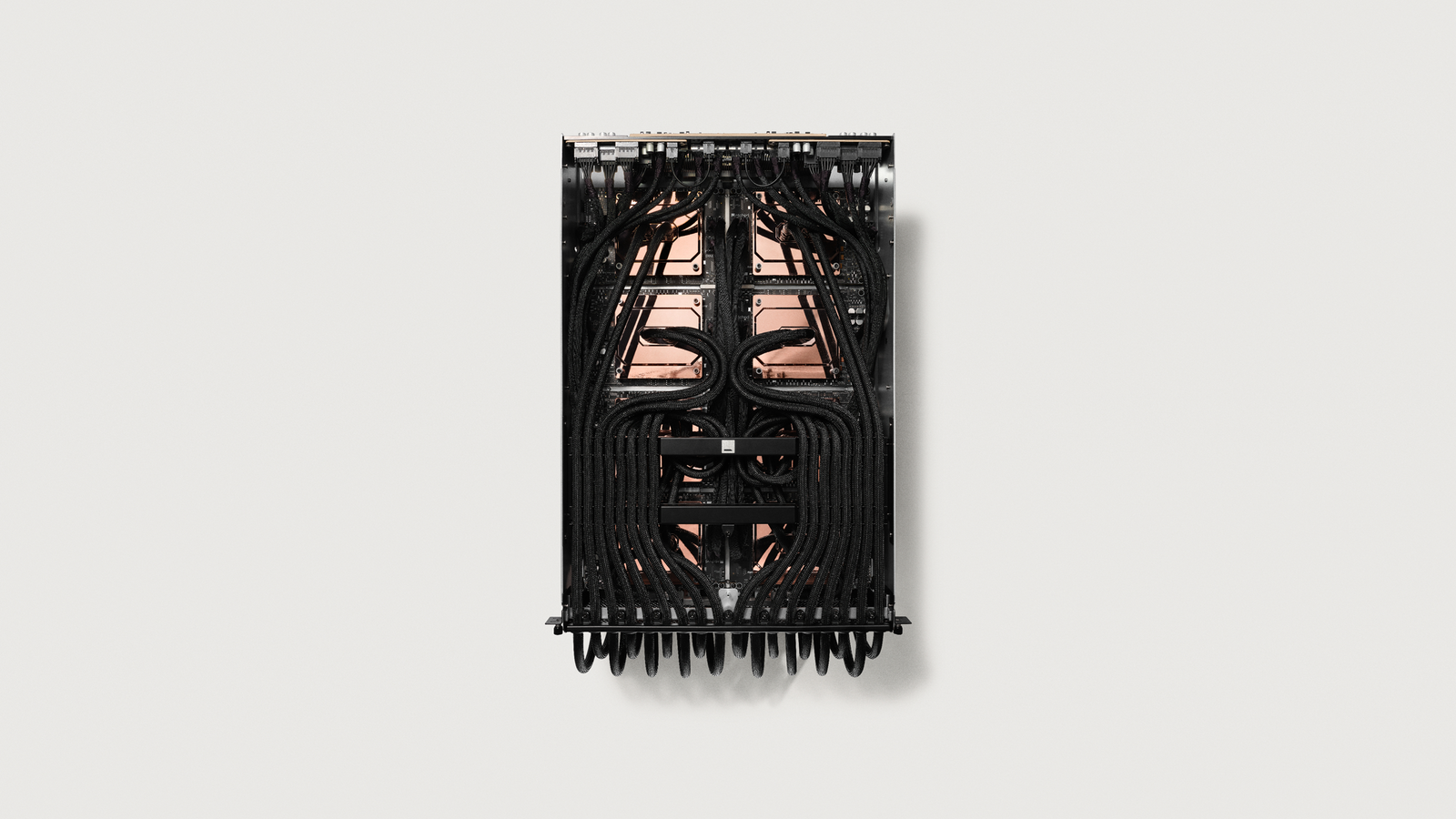
What justifies it is the second half of the announcement rather than the first. Jane Street did not simply lead a round. It tested the chip, bought a system, and installed the first cluster Etched has shipped in its own data center. The firm's public comment was deliberately flat, saying it tested the chip and is pleased with the early results. Etched says booked orders now pass one billion dollars.

Order books and installed racks are different things, and the gap between them has buried more than one chip startup. Announcing both in the same breath is the point of the announcement.

What Etched actually sells now

The product description has changed since July, and this is the part worth reading carefully if you followed the earlier story.

The original bet was Sohu, a chip with the transformer computation hardwired into silicon. Attention, the linear projections, softmax and layer normalisation all fixed in hardware, which buys efficiency by removing the flexibility a general purpose GPU spends transistors on. The risk was equally simple. Hardware that only runs transformers is worthless the day something replaces the transformer.

Etched now describes its systems as frontier inference clusters built from two custom components, and says they support any frontier model. The single architecture dependency has gone. What remains is a split along the two phases of generating a response.

Prefill is the first phase. The model reads your prompt and all of its context in one pass, building the state it needs before it writes anything. That work is highly parallel and compute bound. Etched's prefill component is described as a chip running at low voltage with higher transistor density, which is the standard way to buy throughput per watt when the workload is parallel enough to spread across many slower units.

Decode is the second phase, and it has the opposite shape. The model emits one token, feeds it back in, and emits the next. There is very little arithmetic per token and an enormous amount of memory traffic, because every token requires reading the model weights and the accumulated context again. Decode is bound by memory bandwidth, not compute. Etched's answer here is cluster scale memory and interconnect, with memory pooled across multiple chips rather than trapped on each one.

Comparison of the two phases of language model inference: prefill is compute bound and highly parallel, handling the prompt and context in a single pass, while decode is memory bandwidth bound and produces the visible answer one token at a time.
The two phases want opposite hardware. Running both on one GPU wastes whichever resource the other phase needs. PNG

Co founder Robert Wachen put the division plainly when describing the design. Inference happens in two stages, one handling the prompt including context, the other generating the actual answer the user sees.

Why the split is the real story

Splitting prefill from decode is not an Etched invention, and that is exactly why it matters. The same idea turned up when AMD and Cerebras split inference across two chip types earlier this cycle, and it is showing up across serving stacks that never touch custom silicon at all.

The reasoning is the same everywhere. If you run both phases on identical hardware, one phase is always leaving a resource idle. During prefill your memory bandwidth is underused. During decode your arithmetic units mostly sit there. On a large fleet that idle fraction is the single biggest lever on cost per token, larger than most kernel level optimisation you might attempt instead.

For anyone running inference rather than building it, there are two practical consequences.

The first is measurement. Time to first token is dominated by prefill. Tokens per second after that is dominated by decode. Reporting one blended latency number hides which phase is actually limiting you, and the two are fixed by completely different changes. Longer prompts push you toward prefill pressure. Long generated answers and high concurrency push you toward decode pressure. The second is that batching behaves differently in each phase. Decode benefits enormously from batching many requests together, because the expensive memory reads get shared across every request in the batch, while prefill benefits far less since it is already saturating compute. Serving stacks that schedule the two phases separately are doing so for this reason, and it is worth checking whether yours does.

The part to stay sceptical about

None of this settles the question the market has been asking about specialised inference silicon since the first startup promised to beat the incumbent on tokens per dollar.

One installed cluster at one customer is one data point. Jane Street is an unusually capable buyer with an unusually specific workload, and a firm that runs its own quantitative infrastructure is not a proxy for a hyperscaler serving mixed public traffic. A billion dollars in booked orders is a real number, but orders convert into revenue only if the racks ship, install and hold up, which is precisely where custom silicon has historically stalled.

The valuation carries its own risk. Doubling in four weeks prices in a great deal of execution that has not happened yet, and the incumbent it is priced against keeps shipping. What has genuinely improved is the shape of the bet. Dropping the transformer only constraint removes the failure mode that could have made the hardware obsolete overnight, and the phase split is defensible engineering rather than a wager on the field standing still.

Sources and further reading

Frequently asked questions

What exactly did Etched announce on August eighteenth?

Etched closed a seven hundred million dollar round at a twenty one billion dollar valuation, led by Jane Street. Kleiner Perkins, Sequoia Capital, Andreessen Horowitz, Peter Thiel, Tiger Global, Bain Capital Ventures, Blackstone, Neo, Stripes, Primary, Positive Sum, Diffusion and Argo also took part. Alongside the round the company said it had shipped its first rack, and that the customer receiving it was Jane Street itself. Etched has now booked more than one billion dollars in orders. The valuation was 5 billion dollars in December 2025 and 10.3 billion dollars in July 2026, so this is the second doubling inside eight months.

Why does a trading firm buy AI inference hardware?

Two reasons, and only one of them is trading. Jane Street runs enormous quantitative workloads and has bought unusual compute before, so evaluating a new inference cluster is ordinary work for its infrastructure team. The unusual part is leading the funding round afterwards. A customer that has installed the hardware and then writes the largest cheque in the round is making a claim no benchmark slide can make, which is that the thing works in a real data center under real load. That is why the market read this round as a hardware validation rather than a financing event.

What is the prefill and decode split, in practice?

Generating a response happens in two phases with opposite hardware needs. Prefill reads your prompt and all its context in one pass, which is compute heavy and highly parallel. Decode then produces the answer one token at a time, which is memory bandwidth heavy and barely uses the arithmetic units at all. Run both on the same GPU and one phase always wastes the resource the other one needs. Etched now builds a low voltage, high transistor density chip for prefill and a separate cluster scale memory and interconnect design for decode, with memory pooled across chips. Splitting the two is an industry wide trend, not an Etched invention.

Is this still the transformer only Sohu bet?

It has softened, and that is the most important technical change since July. The original pitch was Sohu, a chip with the transformer architecture hardwired into silicon, fast precisely because it could run nothing else. The obvious risk was that a new model architecture would strand the hardware. Etched now says its systems support any frontier model, which removes the single point of failure that made the original bet so aggressive. The efficiency argument survives, but it no longer depends on the transformer staying dominant forever.

Should this change how I plan inference capacity?

Not yet, but it should change what you measure. The specialised inference vendors are all pushing the same message, which is that tokens per dollar and tokens per watt matter more than raw peak throughput, and that separating prefill from decode is how you improve both. Even if you never buy this hardware, that framing is worth adopting when you evaluate your own serving stack. Measure the two phases separately, because a stack that looks fine on average is often bottlenecked on just one of them. Treat vendor efficiency figures as claims until you have run your own models on your own traffic.