DevNews

Nvidia Reported to Buy Hugging Face for $12.9 Billion

On this page
  1. What each report says
  2. The price, in context
  3. What Nvidia would be buying
  4. The pattern this belongs to
  5. The practical part
  6. Sources and further reading

Three days after Hugging Face was reported to be testing the market, it has a named buyer. The Information reported on the evening of Wednesday, August twenty sixth, 2026 that Nvidia agreed to acquire the platform for twelve point nine billion dollars, a figure picked up by CNBC, Forbes and TechCrunch the following day. Business Insider's version is more cautious: talks valuing the company above thirteen billion dollars, no signed agreement, and a deal that could still fall apart. Neither Nvidia nor Hugging Face has commented. What is being priced is the registry that almost every open weight model passes through, not a frontier lab.

The short answer

The Information reported on the evening of August 26, 2026 that Nvidia agreed to acquire Hugging Face for twelve point nine billion dollars. Business Insider, covering the same talks, says they value the company above thirteen billion dollars but have not produced a signed agreement and could still fall apart. Neither company has commented. Hugging Face last raised at a four and a half billion dollar valuation in 2023, in a round Nvidia took part in, and is reported to have rejected a later Nvidia investment that valued it at seven billion. The Hub hosts more than three million models.

$12.9Bthe price The Information reports was agreed
$4.5Bthe last priced valuation, back in 2023
3M+models hosted on the Hub as of mid August
Answer card summarising the reports of August 26 and 27, 2026: The Information says Nvidia agreed to acquire Hugging Face for 12.9 billion dollars, Business Insider says talks valuing the company above 13 billion dollars have not produced a signed agreement, Hugging Face last raised at a 4.5 billion dollar valuation in 2023 with Nvidia among the investors, and the Hub hosts more than three million models.
Two reports, one company, and a gap worth noticing. PNG

On Sunday the story was that Hugging Face had hired a bank to see who might be interested. By Wednesday night there was a buyer and a number. That is a fast three days, and it is worth being careful about what has actually been established.

What each report says

The Information, citing people with knowledge of the agreement, reported on Wednesday evening that Nvidia agreed to acquire Hugging Face for twelve point nine billion dollars. CNBC, Forbes and TechCrunch carried that account on Thursday.

Business Insider described the same discussions differently. Its report has Nvidia and Hugging Face in talks over recent weeks at a valuation above thirteen billion dollars, with no signed agreement yet and a real chance the whole thing dissolves. Bloomberg's framing was similar.

Neither Nvidia nor Hugging Face has said anything on the record, and neither responded to requests for comment.

Those two accounts are not contradictory so much as separated by one signature. A deal can be agreed in substance and still not be a deal, and technology acquisitions at this size then face regulatory review in more than one jurisdiction before anything closes. So: strongly reported, late stage, not finished.

The price, in context

The last time Hugging Face was priced by an actual transaction was 2023, when it raised two hundred and thirty five million dollars at a four and a half billion dollar valuation. Salesforce Ventures led. Alphabet's GV, IBM Ventures and Nvidia all took part, which means Nvidia would be buying a company it already holds a stake in.

Reporting also says Hugging Face turned down a later Nvidia investment of around five hundred million dollars that would have valued it at seven billion. If the twelve point nine billion figure holds, declining that offer looks like one of the better decisions on the company's record.

Revenue is described as roughly one hundred and fifty million dollars annually, up from about one hundred million two months earlier. On those numbers the multiple is enormous, which tells you the price is not being set by the income statement. It is being set by position.

Comparison card charting Hugging Face valuation milestones: a 4.5 billion dollar valuation in the 2023 funding round, a rejected Nvidia investment offer valuing the company at 7 billion dollars, a reported sale process floor of 13 billion dollars in August 2026, and the 12.9 billion dollar price The Information reports Nvidia agreed.
Three years of numbers attached to the same company. PNG

What Nvidia would be buying

Not a model, and not really a product. A registry.

The Hub holds more than three million models and over a million datasets. Roughly one point one eight million models were added during 2025 alone, more than every prior year put together. Meta, Alibaba, Mistral, Moonshot and Google all publish there, as do tens of thousands of academic and independent developers with no commercial relationship to any of them.

That neutrality is the asset. It is also the part that an acquisition puts under stress, because the reason competing labs are willing to use the same registry is that it belongs to none of them.

The commercial logic for Nvidia is easy enough to follow. Open weight models sell accelerators, and Nvidia has consistently supported open model distribution for that reason. Sitting at the point where a developer chooses which model to pull gives it visibility into demand well before that demand shows up as a purchase order. Hugging Face also rents compute for running models, and Nvidia has compute to place, most recently by putting Groq 3 LPX into full production for inference.

The pattern this belongs to

This is the second large acquisition in a month aimed at the layer between developers and models rather than at the models themselves. Stripe agreed to buy OpenRouter, which routes requests across providers, for more than seven billion dollars. Now the registry is in play.

We wrote when Hugging Face was first reported to be exploring a sale that what was being priced was distribution rather than research. A named buyer whose entire business is the hardware underneath makes that reading harder to argue with, not easier.

The practical part

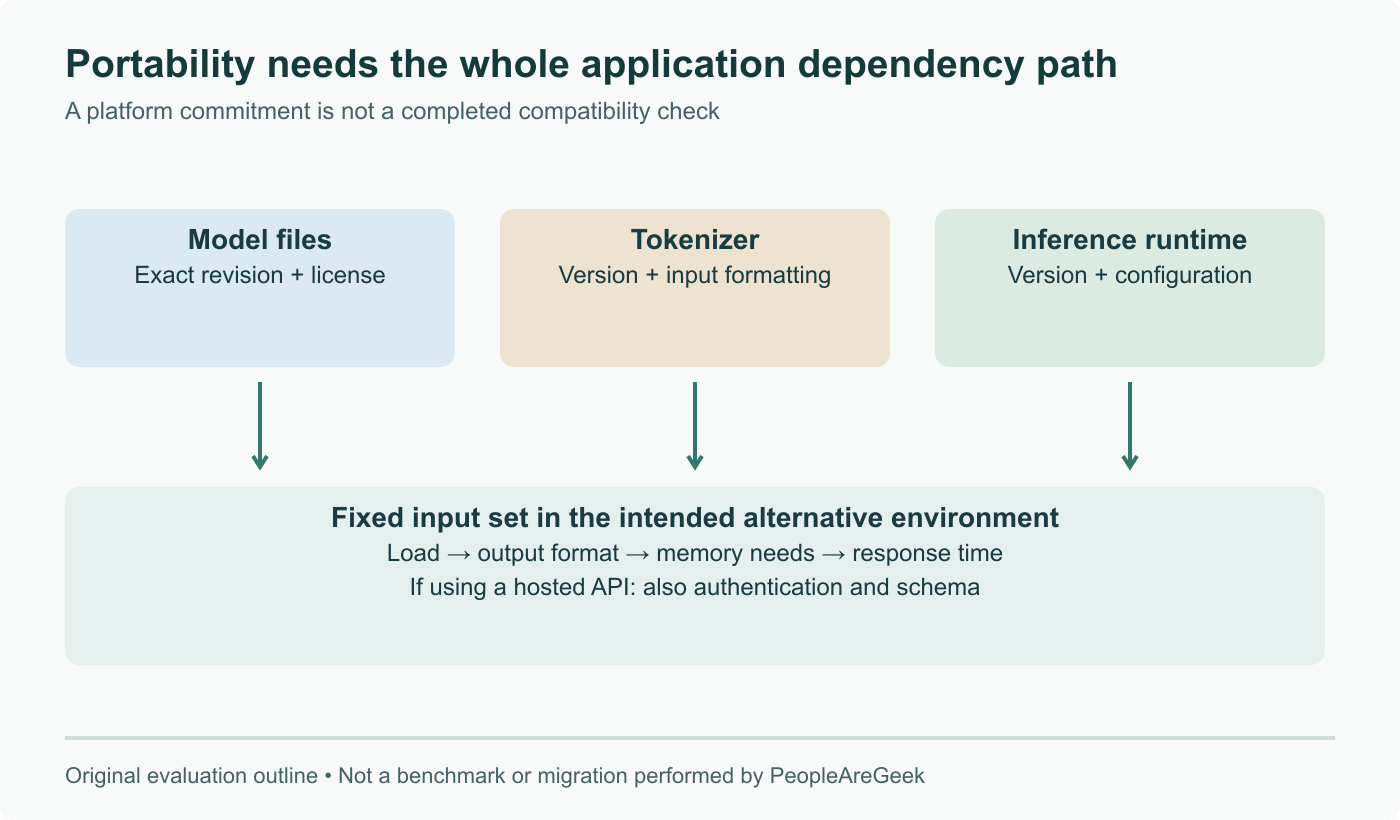
If you have Hugging Face in your build pipeline, and a great many people do without having thought about it much, the useful response has nothing to do with Nvidia.

Pin revisions instead of branch names, so that a model you resolve at build time is the model you tested against. Cache the weights and datasets you actually depend on in storage you control. Then go and find out which of your builds would fail if the Hub started returning errors tomorrow morning, because that number is usually higher than teams expect and it was already true last week.

Ownership changes are a good reason to run that audit. They are rarely the reason the audit was needed.

Sources and further reading

Frequently asked questions

Is this deal actually done?

The two reports disagree, and that disagreement is the most honest summary available. The Information, citing people with knowledge of the agreement, says the deal is agreed at twelve point nine billion dollars. Business Insider, reporting on the same talks, says they had not yet produced a signed agreement and could still collapse. Neither Nvidia nor Hugging Face has confirmed anything publicly or responded to requests for comment. Treat it as a strongly reported late stage negotiation rather than a completed transaction, and remember that even signed technology acquisitions of this size then face regulatory review in several jurisdictions.

Why is Nvidia interested in a model hosting platform?

Because the Hub sits upstream of a great deal of demand for Nvidia hardware, and because it is neutral in a way Nvidia is not. Every major open weight lab publishes there, including labs that compete with each other directly, alongside tens of thousands of academic and independent developers. Owning the place where developers discover, download and try models gives Nvidia visibility into and influence over the default path from idea to running inference. There is also a straightforward capacity argument, since Hugging Face already rents compute to run models and Nvidia has compute to place.

How does $12.9 billion compare with what Hugging Face was worth before?

The last priced round was a two hundred and thirty five million dollar raise in 2023 at a four and a half billion dollar valuation, led by Salesforce Ventures with Alphabet's GV, IBM Ventures and Nvidia itself taking part. So the reported figure is close to triple that, three years later. Reporting also says the company turned down an earlier Nvidia investment of around five hundred million dollars that would have valued it at seven billion. Revenue is described as roughly one hundred and fifty million dollars a year, up from about one hundred million two months earlier.

Would an acquisition change the open weight ecosystem?

It would change who owns the neutral ground, which is a real question even if nothing technical breaks on day one. The Hub's value comes precisely from labs that compete with each other being willing to publish in the same place. A chip vendor owning that venue does not automatically compromise it, and Nvidia has a long record of supporting open model distribution because open models sell accelerators. But some publishers will weigh it differently, and mirrors and alternative registries become a more serious conversation than they were last week.

What should I actually do about my pipelines?

The same thing you should have done anyway, and this is a good prompt for it. A very large number of CI jobs, container builds and inference services resolve model weights from the Hub at build or start time, frequently without a pinned revision, a mirror or a fallback path. That is a single point of failure regardless of the shareholder register. Pin revisions rather than branch names, cache the artefacts you depend on inside your own storage, and find out today which of your builds would fail if the Hub returned errors tomorrow. None of that is a reaction to Nvidia. It is just the dependency hygiene the situation exposes.