SysadminNews

Anthropic Signs a 10 Billion Dollar Compute Deal With Volta

On this page
  1. Norway is not a coincidence
  2. The bitcoin miner in the middle
  3. The part that is genuinely unusual
  4. What we would take from this
  5. Sources and further reading

Bloomberg reported on August 4 that Anthropic has signed a six year, 10 billion dollar compute procurement agreement with Volta Infra Holdings, a cloud infrastructure startup that is months old and only just out of stealth. The capacity is 133 megawatts at a Norwegian data center operated by the bitcoin miner Bitdeer, filled with NVIDIA Vera Rubin chips and running on hydroelectric power, delivered in phases across late 2026 and early 2027. Every part of that sentence tells you something about how AI infrastructure is being assembled right now.

The short answer

Bloomberg reported on August 4 that Anthropic has signed a six year, 10 billion dollar compute agreement with Volta Infra Holdings. The capacity is 133 megawatts at a Norwegian data center operated by bitcoin miner Bitdeer, equipped with NVIDIA Vera Rubin chips and powered entirely by hydroelectricity, with phased delivery across late 2026 and early 2027. Volta is NVIDIA backed, emerged from stealth only recently, and is also reported to count Andreessen Horowitz, Altimeter and Michael Dell among its investors.

133 MWcapacity contracted at the Norwegian site, delivered in phases
6 yearsterm of the compute procurement agreement, worth 10 billion dollars
2026year Volta Infra was founded, months before signing this deal
Answer card: on August 4 2026 Anthropic signed a six year 10 billion dollar compute agreement with Volta Infra Holdings for 133 megawatts of NVIDIA Vera Rubin capacity at a hydroelectric powered Norwegian data center operated by Bitdeer, with phased delivery in late 2026 and early 2027.
The deal in one card. Source: Bloomberg reporting of August 4, 2026, corroborated by subsequent coverage. PNG

The number that gets the headline is 10 billion dollars. The number worth thinking about is 133.

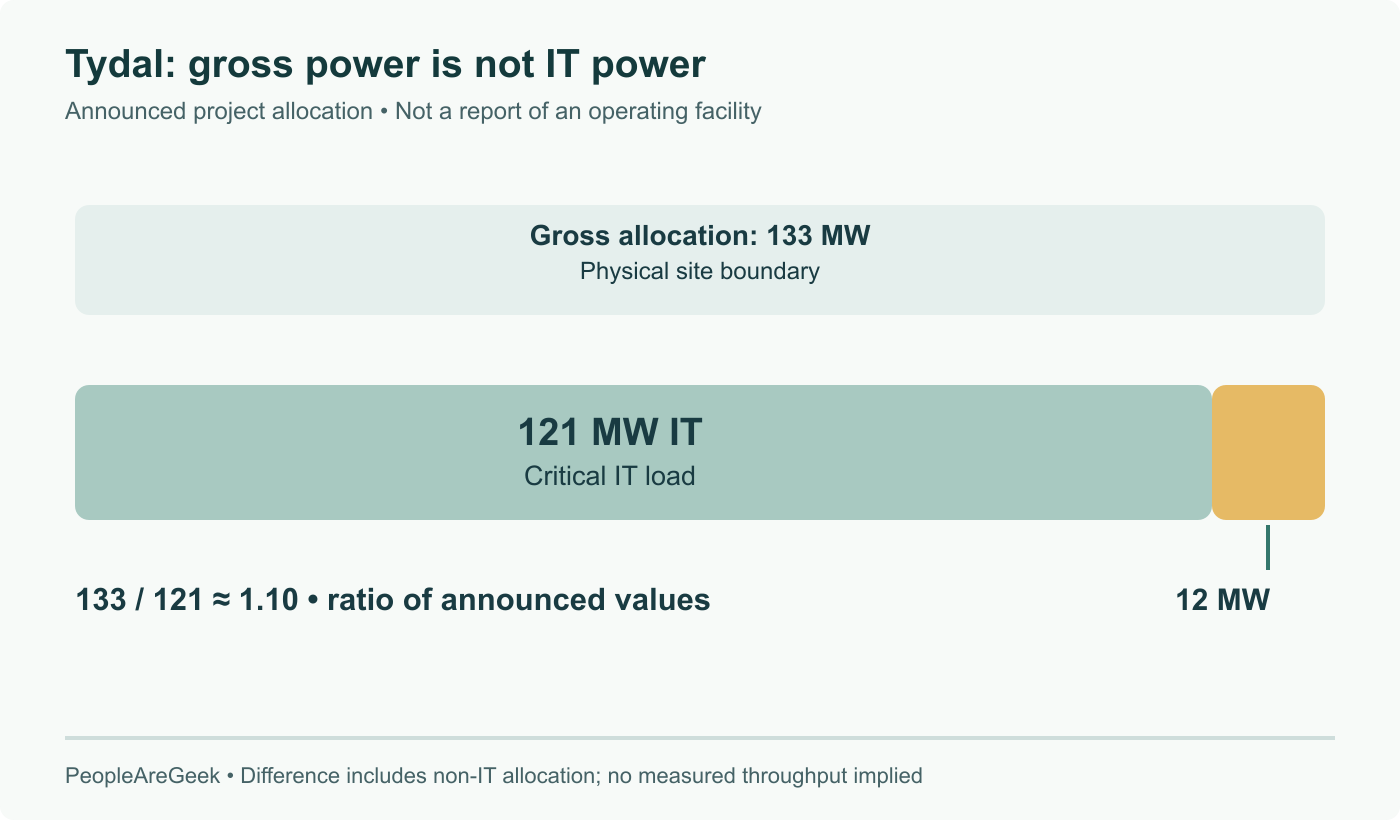
Anthropic has contracted 133 megawatts of compute capacity from Volta Infra Holdings over six years, according to Bloomberg reporting published on August 4. The site is in Norway, operated by Bitdeer Technologies Group, filled with NVIDIA's Vera Rubin generation, and powered by hydroelectricity. Delivery is phased across late 2026 and early 2027.

Megawatts have quietly become the unit the industry actually negotiates in, and the reason is practical. Chip counts stop being comparable the moment a new generation ships. Power draw does not. If you want to know how much compute somebody really bought, ask how many megawatts they contracted and for how long.

Norway is not a coincidence

Three advantages stack at a Nordic site, and only one of them is the obvious one.

Power comes first. Norwegian generation is overwhelmingly hydroelectric, which delivers a combination that is genuinely rare: abundant, actually renewable rather than accounted as renewable, and priced with a stability that matters enormously when you are signing a six year commitment. Anyone who has watched gas exposed European power prices over the last few years understands why a hydro contract is worth paying for.

Climate comes second. Cooling is the overhead that turns a megawatt of accelerators into meaningfully more than a megawatt of site draw, and ambient temperature is the single biggest lever on it. A site that can use outside air for much of the year runs at a facility efficiency that a site in Texas or Arizona has to spend real money to approach.

Grid access comes third and gets discussed least, though it may now be the binding constraint. In large parts of the United States and western Europe, the wait to connect a new large load has stretched into years. A site with an existing industrial interconnect is not just cheaper, it is available on a timeline that a greenfield project cannot promise at any price.

The bitcoin miner in the middle

Bitdeer operating this facility is not a curiosity, it is the pattern.

Mining companies spent a decade accumulating precisely the two assets AI infrastructure is now short of: sites with large secured power contracts, and grid interconnects that already exist and are already energised. The buildings themselves mostly do not transfer, because cheap air cooled halls built for hardware that tolerates heat and failure are the wrong shape for dense liquid cooled accelerator racks. Converting one is genuine construction work, not a relabelling exercise.

But the scarce part transfers completely. Power, and the permission to draw it, is what takes years to obtain. Everything inside the fence is comparatively fast.

Checklist card breaking down the Anthropic and Volta agreement: 133 megawatts over six years for 10 billion dollars, NVIDIA Vera Rubin chips, a Norwegian site operated by Bitdeer, hydroelectric power, phased delivery, and a counterparty founded in 2026.
The parts of the deal worth separating, because they carry very different levels of certainty. PNG

The part that is genuinely unusual

Anthropic signed a 10 billion dollar, six year commitment with a company founded this year.

Volta reportedly came out of stealth backed by Andreessen Horowitz, Altimeter, NVIDIA and Michael Dell, at a valuation around 2.4 billion dollars. That is a serious cap table, and it buys the company credibility it could not otherwise have. It does not build a data center.

The obligation Volta has taken on is to deliver 133 megawatts of dense, liquid cooled capacity on a phased schedule beginning within months. Established operators with a decade of experience find that difficult. A first time operator doing it while also being a first time operator is a real bet, and Anthropic is the party carrying the consequence if the schedule slips.

Why take it? Because the alternative is a place in the queue behind everyone else at the established clouds. Anthropic already has capacity agreements with Amazon, Google, AMD, CoreWeave and SpaceX among others, and has been reported in talks with Meta. When you have exhausted the incumbents' near term availability, a well funded new entrant whose entire reason for existing is your workload starts to look like the faster path.

What we would take from this

Two things, and neither is about Anthropic.

The first is that the compute constraint has moved. It is no longer mainly about acquiring chips. It is about finding somewhere with power to put them and somebody who can build the hall on a schedule. That is why these announcements are structured as multi year capacity commitments with infrastructure companies rather than as hardware orders.

The second follows from it, and it lands closer to home. The resources being consumed here, grid interconnects, long term power contracts, high density colocation space, are the same resources ordinary capacity planning depends on. If you are budgeting rack space and power for the next few years in a market where this is happening, the relevant question is not what the chips cost. It is who is standing in front of you in the queue.

Sources and further reading

Frequently asked questions

How much compute is 133 megawatts in practical terms?

It is a large site but not a hyperscale campus, and megawatts have become the honest unit precisely because chip counts are hard to compare across generations. A useful frame: 133 MW is roughly the continuous electrical draw of a small city's worth of homes, dedicated entirely to one tenant's model training and serving. It is also considerably smaller than the gigawatt scale projects being announced elsewhere in the industry, including ones Anthropic itself is party to. What makes this deal notable is not raw size, it is the price per megawatt implied by 10 billion dollars over six years, and the fact that a company weeks old is the counterparty delivering it.

Why Norway?

Three reasons that stack. Power is the first: Norwegian generation is overwhelmingly hydroelectric, which means abundant, genuinely renewable, and priced with a stability that gas exposed markets cannot match over a six year contract. Climate is the second: ambient temperatures across most of the year cut cooling load substantially, and cooling is the overhead that turns a megawatt of chips into considerably more than a megawatt of site draw. Grid access is the third and least discussed: the queue to connect large loads has become the real constraint on data center construction in much of the United States and western Europe, and Nordic sites with existing industrial interconnects skip years of waiting. The tradeoff is network latency to major population centres, which matters for serving and matters much less for training.

What is a bitcoin miner doing operating an AI data center?

Being exactly the right shape of company for the job. Miners spent a decade acquiring the two things AI infrastructure is short of: sites with large secured power contracts, and grid interconnects that already exist. What they built inside those buildings, low cost air cooled halls for hardware that tolerates heat and failure, is not directly reusable for dense accelerator racks, so the conversion is real construction rather than a relabelling. But the scarce assets, the power and the permission to draw it, transfer completely. Bitdeer operating this Norwegian facility is one instance of a pattern that now runs across the whole sector, and it is the single most reliable explanation for how new AI capacity is appearing faster than new grid connections are being granted.

Is it risky to sign a 10 billion dollar contract with a months old company?

It is an unusual amount of counterparty risk, and it is worth being clear that the risk is about execution rather than intent. Volta reportedly emerged from stealth with backing from Andreessen Horowitz, Altimeter, NVIDIA and Michael Dell, and a valuation around 2.4 billion dollars. That capital and that investor list buy credibility, but they do not build a data center. The company still has to deliver 133 megawatts of dense, liquid cooled, Vera Rubin capacity on a phased schedule starting in months, which is a thing established operators find difficult. Anthropic is presumably pricing that risk into the contract. From the outside, the deal reads as a bet that a purpose built new entrant can move faster than an incumbent with a queue of other customers.

What does this tell us about the compute market generally?

That demand is still comfortably ahead of supply, and that the constraint has moved. It is no longer primarily about buying chips, it is about finding somewhere with power to put them and someone able to build the hall around them on a schedule. That is why the deals being announced are structured as multi year capacity commitments with infrastructure companies rather than as hardware purchases, and why an AI lab will contract with an operator that did not exist a year ago. For anyone running ordinary infrastructure, the second order effect is the one to watch: the same scarce resources, grid interconnects, power contracts, high density colocation, are the ones your own capacity planning depends on.