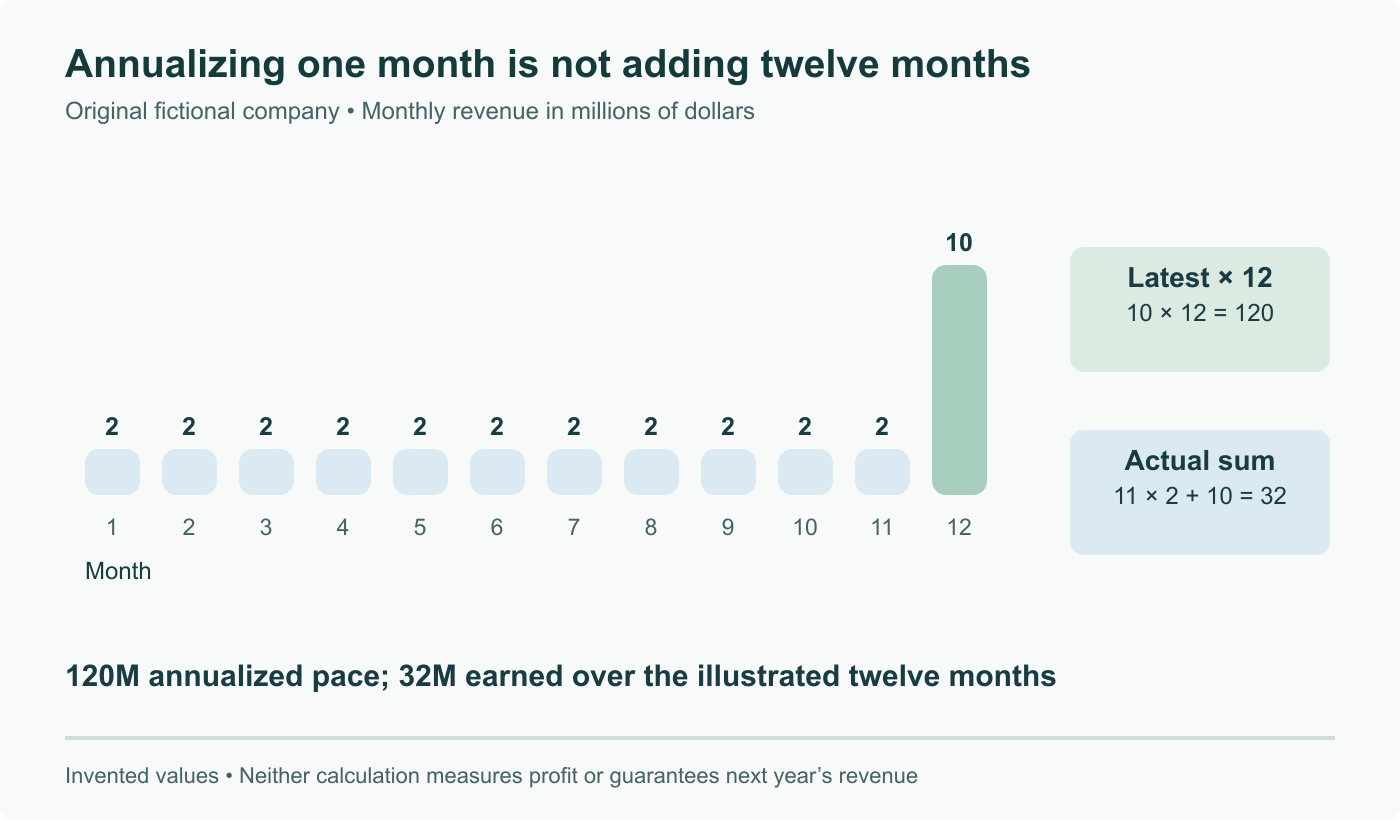
Higgsfield closed a four hundred million dollar Series B at a five point four billion dollar valuation, announced on August seventeenth, 2026 and led by DST Global. The number that explains the round is not the valuation, it is the seven hundred million dollars of annualized revenue the company says it reached this month, roughly four times its valuation six months ago. Higgsfield builds an AI video and image platform for professional creators, agencies and brands, and it says thirty million users across two hundred thirty eight countries now run through it. For engineers, the interesting part sits underneath: an orchestration layer over thirty five plus models.
The short answer
Higgsfield announced a four hundred million dollar Series B on August seventeenth, 2026, led by DST Global at a five point four billion dollar valuation, roughly four times its one point three billion dollar mark six months earlier. The company says annualized revenue reached seven hundred million dollars this month, with more than thirty million users across two hundred thirty eight countries and three hundred ninety Fortune 500 customers. Its Supercomputer product orchestrates more than thirty five models behind a single brief.
The valuation is what everyone will quote. The revenue line underneath it is the one that changes how you should read the round.
The round
Higgsfield announced on Monday, August seventeenth, 2026 that it raised four hundred million dollars in a Series B led by DST Global, valuing the company at five point four billion dollars. Bloomberg and the Financial Times carried it the same day.
The investor list runs long and reads deliberately: Tribe Capital, Growth Equity at Goldman Sachs Alternatives, Smash Capital, Fifth Wall, Valor Capital, Intel Capital, Liberty Global Tech Ventures, Mirae Asset Capital and NTT DOCOMO Ventures joined, with Accel, Menlo Ventures, AI Capital Partners, GFT Ventures, Capra Ventures, BAM Corner Point and BroadLight Capital following on from earlier rounds. Intel Capital, Liberty Global and NTT DOCOMO are compute, connectivity and distribution money rather than pure financial money, which tells you something about how the company expects to scale.
The company was founded in 2023 by Alex Mashrabov, previously at Snap after it acquired his company AI Factory in 2019, with Yerzat Dulat as chief technology officer.
The multiple is the story
Six months ago the Series A priced Higgsfield at one point three billion dollars. This round prices it at five point four billion, which Bloomberg described as a fourfold move. Over the same period the company says annualized revenue reached seven hundred million dollars.
Divide one by the other and the round values the business at roughly seven and a half times annualized revenue. In a year where AI companies have repeatedly been priced at multiples with no revenue underneath them at all, that is a comparatively conventional number. The unusual part is not the valuation, it is that a two year old company reports a revenue run rate at this scale.
Reported reach: more than thirty million users across two hundred thirty eight countries, with the United States the largest market, and three hundred ninety Fortune 500 companies as customers across advertising, media, entertainment, broadcasting, fashion and retail. These are company figures rather than audited ones, which is the normal caveat for a private round.
What the product is, in engineering terms
Higgsfield sells an AI native platform for video and image production, targeted at professional creators, brands, agencies and studios rather than casual users.
The interesting component is Supercomputer, rolled out in May 2026. Instead of asking the user to choose a model, a preset and a sequence of steps, it takes a plain language brief, a reel, an ad, a product shot, a week of content, plans the production, picks the models and returns finished assets. Supercomputer 2.0, shown in June 2026, extends that into an enterprise marketing agent built on NVIDIA's Agent Toolkit, orchestrating more than thirty five models and integrating with Slack, Drive, Notion, Gmail and Figma so output lands in the tools a team already uses.
Read that description without the marketing vocabulary and it is a planner, a model router and a delivery layer with brand context attached. Which is a familiar architecture.
The orchestration layer keeps getting priced up
This is the second time this month that the market has put a large number on the code that sits between a user and a set of models rather than on the models themselves. Stripe agreed to buy the model router OpenRouter for more than seven billion dollars the day before this round was announced.
The pattern is not a coincidence, and the logic holds up under inspection. Frontier models change every few weeks. The integration work, the evaluation harness, the prompt and preset library, the brand constraints, the fallback behaviour when a provider rate limits you: none of that is thrown away when a new model ships, and all of it gets more valuable as the number of viable models grows. Value accrues to the part of the system that does not have to be rewritten.
That is worth holding onto if you are building anything on top of models right now. The temptation is to treat the orchestration code as glue and keep it thin and undocumented. Two funding rounds this week suggest it is the asset.
Three risks the headline hides
Dependency comes first. A company whose product is orchestration across thirty five models is exposed to every one of those providers on pricing, licensing, availability and the possibility that one of them ships the same product.
Margin comes second. Video inference is among the most expensive workloads in the field, and a revenue run rate says nothing about what is left after compute. Higgsfield did not disclose gross margin, and nobody at this stage does.
Concentration comes third. Three hundred ninety Fortune 500 customers is genuine enterprise reach, and it also means the growth rate is now partly set by enterprise procurement cycles rather than by product velocity.
The company also says it is expanding Higgsfield Academy, its free training programme, which reports more than four hundred thousand course visitors, and launching Higgsfield For Good in September 2026.
Sources and further reading
- Higgsfield Raises $400 Million Series B Financing at $5.4 Billion Valuation with Annualized Revenue Reaching $700 Million, PR Newswire, August 17, 2026
- Higgsfield's valuation soars fourfold to US$5.4 billion in six months on AI content demand, BNN Bloomberg, August 17, 2026
- Goldman Sachs, Intel Back Higgsfield in $400M Raise at $5.4B Valuation, citybiz, August 17, 2026
- Higgsfield raises $400M from Goldman Sachs, DST Global at $5.4B valuation, Tech Funding News, August 17, 2026
- Higgsfield Scales Video Production With NVIDIA AI, NVIDIA case study
Frequently asked questions
What exactly was announced, and by whom?
Higgsfield announced on August seventeenth, 2026 that it raised four hundred million dollars in a Series B at a five point four billion dollar valuation, in a press release carried on PR Newswire and reported the same day by Bloomberg and the Financial Times. DST Global led the round. Participants include Tribe Capital, Growth Equity at Goldman Sachs Alternatives, Smash Capital, Fifth Wall, Valor Capital, Intel Capital, Liberty Global Tech Ventures, Mirae Asset Capital and NTT DOCOMO Ventures, with existing investors Accel, Menlo Ventures, AI Capital Partners, GFT Ventures, Capra Ventures, BAM Corner Point and BroadLight Capital following on. This is a company announcement, not a leaked report, so the figures come from the company itself.
How fast did the valuation actually move?
Higgsfield's Series A valued the company at one point three billion dollars. The Series B values it at five point four billion. Bloomberg described that as a fourfold increase in six months. Alongside it, the company says annualized revenue reached seven hundred million dollars this month. Put the two together and the round prices the business at roughly seven and a half times annualized revenue, which is a comparatively sober multiple by the standards of AI funding in 2026. The valuation is the headline, but the revenue line is the thing that made the valuation possible.
What does the product actually do?
It is an AI native platform for video and image production aimed at professional creators, brands, agencies and studios rather than hobbyists. The flagship piece is Supercomputer, rolled out in May 2026, an agentic layer where you describe the output you want, a reel, an ad, a product shot, a week of content, and the system plans the production, selects models and presets and returns finished assets. Supercomputer 2.0, shown in June 2026, is an enterprise marketing agent built on NVIDIA's Agent Toolkit that orchestrates more than thirty five models and connects to Slack, Drive, Notion, Gmail and Figma so assets land where the team already works.
Why should a developer care about a video startup round?
Because of where the value is landing. Higgsfield does not train the frontier video models it depends on, it routes between them and wraps them in planning, brand context and delivery. That is the same pattern that produced a seven billion dollar price tag for a model router earlier this month. Two rounds in one week priced the orchestration layer well above what most people would have guessed a year ago, and the reason is durable: the models keep changing, so the code that decides which model to call, with what prompt, under what brand constraints, is where the compounding work actually accumulates.
What are the credible risks in this position?
Three. First, dependency: an orchestration business sits on top of model providers that can change pricing, licensing or availability, and can ship a competing product. Second, margin: inference for video is expensive, and seven hundred million dollars of annualized revenue tells you nothing about gross margin, which the company did not disclose. Third, concentration: the company reports three hundred ninety Fortune 500 customers, which is impressive reach but also means enterprise procurement cycles now set the growth rate. None of those are unusual, and none of them are visible in a valuation headline.